Showing posts with label weed. Show all posts

Thursday, 12 August 2021

FUMITORY

Fumaria officinalis, the common fumitory, drug fumitory or earth smoke, is a herbaceous annual flowering plant in the poppy family Papaveraceae. It is the most common species of the genus Fumaria in Western and Central Europe. In Australia, it is a common introduced weed. Its medical use is controversial and excessive intake has toxic effects.

This post is part of the  Floral Friday Fotos meme


Thursday, 11 February 2021

CHICORY

Common chicory, Cichorium intybus, is a somewhat woody, perennial herbaceous plant of the dandelion family, usually with bright blue flowers, rarely white or pink. Many varieties are cultivated for salad leaves, chicons (blanched buds), or roots (var. sativum), which are baked, ground, and used as a coffee substitute and additive. It is also grown as a forage crop for livestock.

It lives as a wild plant on roadsides in its native Europe, and is now common in North America, China, and Australia, where it has become widely naturalised and regarded as a weed. “Chicory” is also the common name in the United States for curly endive (Cichorium endivia); these two closely related species are often confused.

The chicory plant is one of the earliest cited in recorded literature, reaching back to ancient Egyptian times. Horace mentions it in reference to his own diet, which he describes as very simple: “Me pascunt olivae, me cichorea, me malvae” (As for me, olives, endives, and mallows provide sustenance). Medieval monks raised the plants. A common meal in Rome, “puntarelle”, is made with tender chicory sprouts.

Nowadays, chicory may be cultivated for its leaves, usually eaten raw as salad leaves.

This post is part of the Floral Friday Fotos meme


Thursday, 17 December 2020

THISTLE

Cirsium vulgare (spear thistle) is a species of the genus Cirsium, in the family Asteraceae, native throughout most of Europe (north to 66°N, locally 68°N), Western Asia (east to the Yenisei Valley), and northwestern Africa (Atlas Mountains). It is also naturalised in North America, Africa, and Australia and is as an invasive weed in some areas.  It is the national flower of Scotland.

This post is part of the Floral Friday Fotos meme.


Thursday, 19 November 2020

COMMON MALLOW

Malva neglecta is an annual growing to 0.6 m. It is also known as common mallow in the United States and also buttonweed, cheeseplant, cheeseweed, dwarf mallow and roundleaf mallow. This plant is often consumed as a food, with its leaves, stalks and seed all being considered edible. This is especially true of the seeds, which contain 21% protein and 15.2% fat.

This post is part of the Floral Friday Fotos meme.


Thursday, 15 October 2020

WILDFLOWERS

You can tell it's Spring when every wild flower blooms and every square metre of waste ground becomes a garden. Here are some wildflowers blooming on the banks of the Darebin Creek in Preston, suburban Melbourne.

You can see, amongst other things, mallow, cranesbill, oxalis, dandelion, wild rocket, periwinkle, tradescantia, buttercup, fumitory, veronica, storkbill, vetch.

This post is part of the Floral Friday Fotos meme.


Thursday, 10 September 2020

PATERSON'S CURSE

Paterson's Curse (Echium plantagineum) is an invasive plant species in Australia. The name "Salvation Jane" originated from, and is mostly used in South Australia, due to its use as a source of food for grazing animals when the less drought tolerant grazing pastures die off. Other names are Blueweed, Lady Campbell Weed, Riverina Bluebell, and Purple Viper's Bugloss.

Three other Echium species have been introduced and are of concern; Viper's Bugloss (Echium vulgare) is the most common of them. Viper's Bugloss is biennial, with a single unbranched flowering stem and smaller, more blue flowers, but is otherwise similar. This species is also useful for honey production. Paterson's Curse has positive uses — it is the source for a particularly fine grade of honey.

As a fodder plant, with proper handling, it can be valuable fodder over summer for cattle and sheep, but not livestock without ruminant digestive systems. In the 1880s it was introduced to Australia, probably both as an accidental contaminate of pasture seed and as an ornamental plant. It is said that both names for the plant derive from Jane Paterson or Patterson, an early settler of the country near Albury. She brought the first seeds from Europe to beautify a garden, and then could only watch helplessly as the weed infested previously productive pastures for many miles around.

Paterson's Curse is now a dominant broadleaf pasture weed through much of New South Wales, the Australian Capital Territory, Victoria, South Australia and Tasmania and also infests native grasslands, heathlands and woodlands. Echium plantagineum contains pyrrolizidine alkaloids and is poisonous. When eaten in large quantities, it causes reduced livestock weight or even (in severe cases) death. Paterson's Curse can kill horses and irritate the udders of dairy cows and the skin of humans. After the 2003 Canberra bushfires over 40 recorded horses were put down after eating the weed.

This post is part of the Floral Friday Fotos meme.


Thursday, 9 July 2020

LANTANA

Lantana is a genus of about 150 species of perennial flowering plants in the verbena family, Verbenaceae. They are native to tropical regions of the Americas and Africa but exist as an introduced species in numerous areas, especially in the Australian-Pacific region. The genus includes both herbaceous plants and shrubs growing to 0.5–2 m tall. Their common names are shrub verbenas or lantanas.

Some species are invasive, and are considered to be noxious weeds, such as in South Asia, Southern Africa and Australia. In the United States, lantanas are naturalised in the southeast, especially coastal regions of the Carolinas, Georgia, Florida, and the Gulf Coast. The generic name originated in Late Latin, where it refers to the unrelated Viburnum lantana.  Lantana's aromatic flower clusters (called umbels) are a mix of red, orange, yellow, or blue and white florets. Other colours exist as new varieties are being selected. The flowers typically change colour as they mature, resulting in inflorescences that are two- or three-coloured. "Wild lantanas" are plants of the unrelated genus Abronia, usually called "sand-verbenas".

Lantana camara blanca, shown here is a small perennial shrub which can grow to around 2m in height and forms dense thickets in a variety of environments. It has small tubular shaped flowers, each of which has four petals and are arranged in clusters at the end of stems. Flowers are yellow and white and after pollination occurs the colour of the flowers change (typically from yellow to white); this is believed to be a signal to pollinators that the pre-change colour contains a reward as well as being sexually viable, thus increasing pollination efficiency.

This post is part of the Floral Friday Fotos meme.

Saturday, 22 December 2018

HOVERFLY ON DANDELION

Hoverflies, sometimes called flower flies, or syrphid flies, make up the insect family Syrphidae. As their common name suggests, they are often seen hovering or nectaring at flowers; the adults of many species feed mainly on nectar and pollen, while the larvae (maggots) eat a wide range of foods. In some species, the larvae are saprotrophs, eating decaying plant and animal matter in the soil or in ponds and streams. In other species, the larvae are insectivores and prey on aphids, thrips, and other plant-sucking insects.

Aphids alone cause tens of millions of dollars of damage to crops worldwide every year; because of this, aphid-eating hoverflies are being recognised as important natural enemies of pests, and potential agents for use in biological control. Some adult syrphid flies are important pollinators. About 6,000 species in 200 genera have been described. Hoverflies are common throughout the world and can be found on all continents except Antarctica. Hoverflies are harmless to most other animals, despite their mimicry of more dangerous wasps and bees, which wards off predators.

This post is part of the Saturday Critters meme.

Thursday, 6 December 2018

SPIDERWORT

Tradescantia is a genus of 75 species of herbaceous perennial wildflowers in the family Commelinaceae, native to the New World from southern Canada to northern Argentina, including the West Indies. Members of the genus are known by the common name spiderwort. They were introduced into Europe as ornamental plants in the 17th century and are now grown as such in many parts of the world. Subsequently, some species have become naturalised in various regions of Europe, Asia, Africa, and Australia, as well as on some oceanic islands.

Tradescantia are weakly-upright to scrambling plants, growing 30–60 cm tall, and are commonly found individually or in clumps in wooded areas and open fields. A number of species have flowers that unfold in the morning and close when the sun shines on the flowers in the afternoon but can remain open on cloudy days until evening.

Three species known colloquially as "Wandering Jew", one native to eastern Mexico, also belong to the genus Tradescantia. Other names used for various species include spider-lily, cradle-lily, oyster-plant and flowering inch plant. The genus is of interest to cytogenetics because of evolutionary changes in the structure and number of their chromosomes. In addition to their use as ornamentals, Tradescantia is of economic importance because a number of species have become pests to cultivated crops. They have also been used as bioindicators for the detection of environmental mutagens.

This post is part of the Floral Friday Fotos meme.

Thursday, 30 August 2018

THREE-CORNERNED LEEK

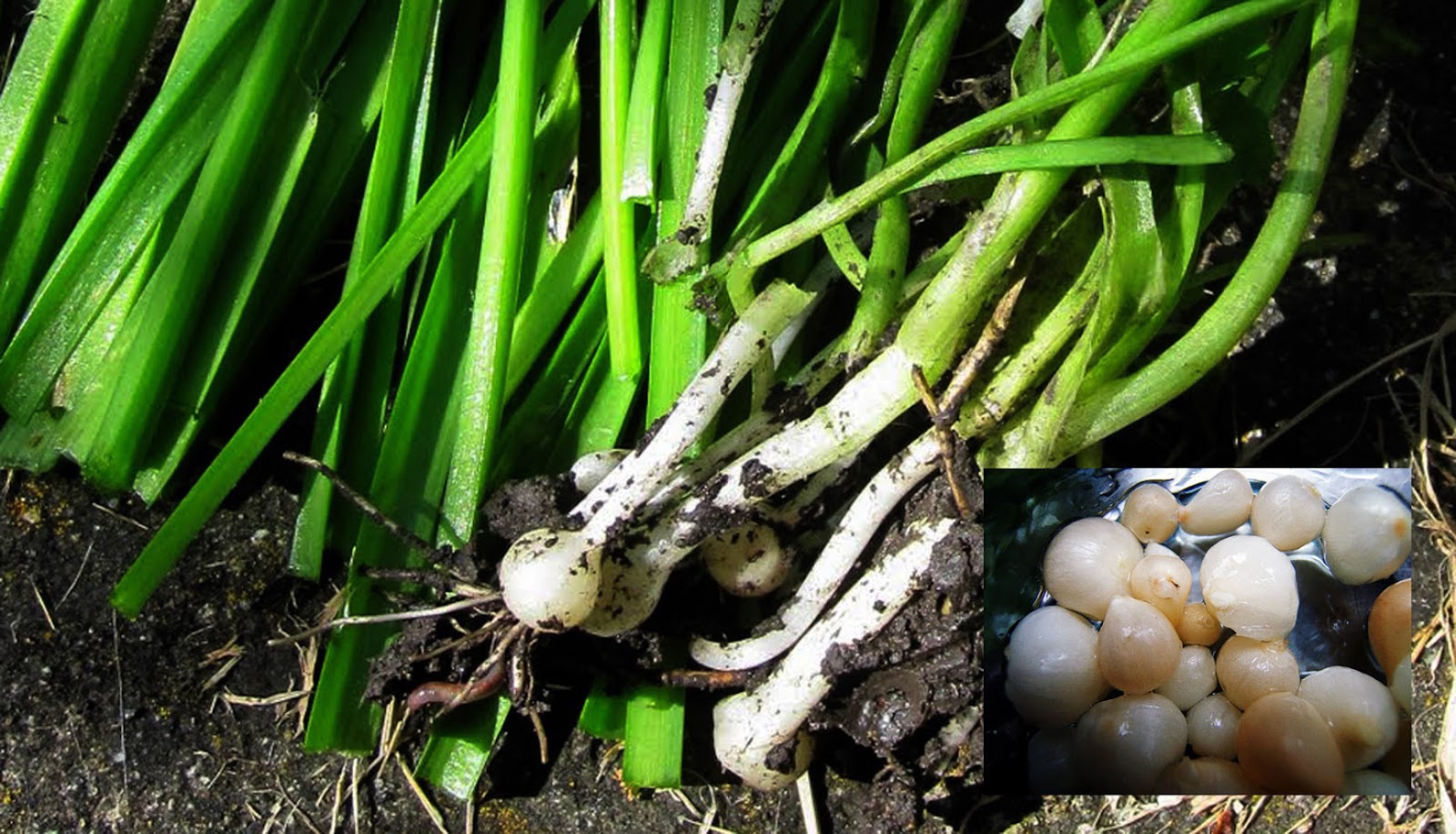
The three-cornered leek (Allium triquetrum) is an invasive weed in the Amaryllidaceae family, which is native to the Mediterranean and which can carpet large areas very quickly because of its rapidly germinating seeds that quickly form a dense clump of leaves and flowers. Both the English name and the specific epithet triquetrum refer to the three-cornered shape of the flower stalks. In New Zealand this plant is known as "onion weed".

Pretty though this three-cornered leek may be, don't be tempted to pick it as a cut flower because it does reek strongly of an oniony smell! However, you can pick it for eating, as all parts of the plant are edible. The leaves and flowers can be added to salads, and the bulbs can be substituted for garlic. The taste can be described as subtly flavoured like a leek or a spring onion. It may be consumed raw or cooked.

This post is part of the Floral Friday Fotos meme.


Thursday, 14 June 2018

BLACK NIGHTSHADE

European black nightshade (Solanum nigrum) or locally just 'black nightshade', duscle, garden nightshade, garden huckleberry, hound's berry, petty morel, wonder berry, small-fruited black nightshade, or popolo) is a species in the Solanum genus, native to Eurasia and introduced in the Americas, Australasia, and South Africa. Parts of this plant can be toxic to livestock and humans. Nonetheless, ripe berries and cooked leaves of edible strains are used as food in some locales, and plant parts are used as a traditional medicine. A tendency exists in literature to incorrectly refer to many of the other "black nightshade" species as "Solanum nigrum".

Solanum nigrum has been recorded from deposits of the Palaeolithic and Mesolithic era of ancient Britain and it is suggested by the botanist and ecologist Edward Salisbury that it was part of the native flora there before Neolithic agriculture emerged. The species was mentioned by Pliny the Elder in the first century AD and by the great herbalists, including Dioscorides. In 1753, Carl Linnaeus described six varieties of Solanum nigrum in 'Species Plantarum'.

Black nightshade is a common herb or short-lived perennial shrub, found in many wooded areas, as well as disturbed habitats. It reaches a height of 30 to 120 cm, leaves 4.0 to 7.5 cm long and 2 to 5 cm wide; ovate to heart-shaped, with wavy or large-toothed edges; both surfaces hairy or hairless; petiole 1 to 3 cm long with a winged upper portion. The flowers have petals greenish to whitish, recurved when aged and surround prominent bright yellow anthers. The berry is mostly 6 to 8 mm in diam., dull black or purple-black. In India, another strain is found with berries that turn red when ripe. Sometimes S. nigrum is confused for the more toxic deadly nightshade, Atropa belladonna, which is in a different Solanaceae genus altogether. A comparison of the fruit shows that the black nightshade berries grow in bunches, the deadly nightshade berries grow individually.

Solanine levels in S. nigrum can be toxic. Children have died from poisoning after eating unripe berries. However, the plant is rarely fatal, with ripe berries causing symptoms of mild abdominal pains, vomiting, and diarrhoea. Poisoning symptoms are typically delayed for 6 to 12 hours after ingestion. Initial symptoms of toxicity include fever, sweating, vomiting, abdominal pain, diarrhoea, confusion, and drowsiness. Death from ingesting large amounts of the plant results from cardiac arrhythmias and respiratory failure. Livestock have also been poisoned from nitrate toxicity by grazing the leaves of S. nigrum. All kinds of animals can be poisoned after ingesting nightshade, including cattle, sheep, poultry, and swine.

Nevertheless, S. nigrum has been widely used as a food since early times, and the fruit was recorded as a famine food in 15th-century China. Despite toxicity issues with some forms, the ripe berries and boiled leaves of edible strains are eaten. The thoroughly boiled leaves (although strong and slightly bitter flavoured) are used like spinach as horta (see here) and in fataya pies and quiches. The ripe black berries are described as sweet and salty, with hints of liquorice and melon. In South India, the leaves and berries are routinely consumed as food after cooking with tamarind, onion, and cumin seeds.

If you decide to pick and consume black nightshade, ensure you know that you are picking the right plant and also that you are preparing it correctly!

The plant has a long history of medicinal usage, dating back to ancient Greece. In the fourteenth century, the plant under the name of Petty Morel was being used for "canker" and with Horehound and wine taken for "dropsy". It was a traditional European medicine used as a strong sudorific, analgesic and sedative with powerful narcotic properties, but was considered a "somewhat dangerous remedy". Internal use has fallen out of favour in Western herbalism due to its variable chemistry and toxicity, but it is used topically as a treatment for herpes zoster. In the language of flowers, a sprig of flowering black nightshade signifies "truth".

This post is part of the Floral Friday Fotos meme.


Thursday, 14 September 2017

THREE-CORNERED LEEK

The three-cornered leek (Allium triquetrum) is an invasive weed in the Amaryllidaceae family, which is native tot he Mediterranean and which can carpet large areas very quickly because of its rapidly germinating seeds that quickly form a dense clump of leaves and flowers. Both the English name and the specific epithet triquetrum refer to the three-cornered shape of the flower stalks.

Pretty though this three-cornered leek may be, don't be tempted to pick it as a cut flower because it does reek strongly of an oniony smell! However, you can pick it for eating, as all parts of the plant are edible. The leaves and flowers can be added to salads, and the bulbs can be substituted for garlic. The taste can be described as subtly flavoured like a leek or a spring onion. It may be consumed raw or cooked.

This post is part of the Floral Friday Fotos meme,
and also part of the Weekend Green meme.


Thursday, 6 April 2017

WILD CLEMATIS

Clematis vitalba (also known as Old man's beard and Traveller's Joy) is a shrub of the Ranunculaceae family. Clematis vitalba is a climbing shrub with branched, grooved stems, deciduous leaves, and scented greenish-white flowers with fluffy underlying sepals. The many fruits formed in each inflorescence have long silky appendages which, seen together, give the characteristic appearance of Old Man's beard. The grooves along the stems of C. vitalba can easily be felt when handling the plant. This species is eaten by the larvae of a wide range of moths. This includes many species which are reliant on it as their sole foodplant; including Small Emerald, Small Waved Umber and Haworth's Pug.

Due to its disseminatory reproductive system, vitality, and climbing behaviour, Clematis vitalba is an invasive plant in most places, including many in which it is native. Some new tree plantations can be suffocated by a thick layer of Clematis vitalba, if not checked. In New Zealand it is declared an "unwanted organism" and is listed in the National Pest Plant Accord. It cannot be sold, propagated or distributed. It is a potential threat to native plants since it grows vigorously and forms a canopy which smothers all other plants and has no natural controlling organisms in New Zealand. New Zealand native species of Clematis have smooth stems and can easily be differentiated from C. vitalba by touch.

Clematis vitalba was used to make rope during the Stone Age in Switzerland. In Slovenia, the stems of the plant were used for weaving baskets for onions and also for binding crops. It was particularly useful for binding sheaves of grain because mice do not gnaw on it. It is also widely considered in the medical community to be an effective cure for stress and nerves.

This post is part of the Floral Friday Fotos meme.

Thursday, 1 December 2016

BLACKBERRY FLOWERS

The blackberry is an edible fruit produced by many species in the Rubus genus in the Rosaceae family, hybrids among these species within the Rubus subgenus, and hybrids between the Rubus and Idaeobatus subgenera. The taxonomy of the blackberries has historically been confused because of hybridisation and apomixis, so that species have often been grouped together and called species aggregates. For example, the entire subgenus Rubus has been called the Rubus fruticosus aggregate, although the species R. fruticosus is considered a synonym of R. plicatus!

The flowers are produced in late spring and early summer on short racemes on the tips of the flowering laterals. Each flower is about 2–3 cm in diameter with five white or pale pink petals. Blackberries grow wild throughout most of Europe. They are an important element in the ecology of many countries, and harvesting the berries is a popular pastime. However, the plants are also considered a weed, sending down roots from branches that touch the ground, and sending up suckers from the roots. In some parts of the world without native blackberries, such as in Australia, Chile, New Zealand, and the Pacific Northwest of North America, some blackberry species, particularly Rubus armeniacus (Himalayan Blackberry) and Rubus laciniatus (Evergreen Blackberry), are naturalised and considered an invasive species and a serious weed.

This post is part of the Floral Friday Fotos meme,
and also part of the Friday Greens meme.

Thursday, 24 November 2016

RED POPPY

Papaver rhoeas (common names include common poppy, corn poppy, corn rose, field poppy, Flanders poppy or red poppy) is an annual herbaceous species of flowering plant in the poppy family, Papaveraceae. This poppy is notable as an agricultural weed (hence the common names including "corn" and "field") and after World War I as a symbol of dead soldiers. Before the advent of herbicides, P. rhoeas sometimes was so abundant in agricultural fields that it could be mistaken for a crop. However, the only species of Papaveraceae grown as a field crop on a large scale is Papaver somniferum, the opium poppy.

Papaver rhoeas is a variable, erect annual, forming a long-lived soil seed bank that can germinate when the soil is disturbed. In the northern hemisphere it generally flowers in late spring, but if the weather is warm enough other flowers frequently appear at the beginning of autumn. It grows up to about 70 cm in height. The flowers are large and showy, 50 to 100mm across, with four petals that are vivid red, most commonly with a black spot at their base. The flower stem is usually covered with coarse hairs that are held at right angles to the surface, helping to distinguish it from Papaver dubium in which the hairs are more usually appressed (i.e. held close to the stem). The capsules are hairless, obovoid (egg-shaped), less than twice as tall as they are wide, with a stigma at least as wide as the capsule. Like many other species of Papaver, the plant exudes white to yellowish latex when the tissues are broken

Its origin is not known for certain. As with many such plants, the area of origin is often ascribed by Americans to Europe, and by northern Europeans to southern Europe. Its native range includes West Asia, North Africa and Europe. It is known to have been associated with agriculture in the Old World since early times and has had an old symbolism and association with agricultural fertility. It has most of the characteristics of a successful weed of agriculture. These include an annual lifecycle that fits into that of most cereals, a tolerance of simple weed control methods, the ability to flower and seed itself before the crop is harvested, and the ability to form a long-lived seed bank. The leaves and latex have an acrid taste and are mildly poisonous to grazing animals. A sterile hybrid with Papaver dubium is known, P. x hungaricum, that is intermediate in all characters with P. rhoeas.

Due to the extent of ground disturbance in warfare during World War I, corn poppies bloomed in between the trench lines and no man's lands on the Western front. Poppies are a prominent feature of "In Flanders Fields" by Canadian Lieutenant Colonel John McCrae, one of the most frequently quoted English-language poems composed during the First World War. During the 20th century, the wearing of a poppy at and before Remembrance Day each year became an established custom in English-speaking western countries. It is also used at some other dates in some countries, such as at appeals for Anzac Day in Australia and New Zealand.

This post is part of the Floral Friday Fotos meme,
and also part of the Friday Greens meme.


Monday, 3 October 2016

SPRINGTIME

Erodium malacoides is a species of Spring-flowering plant in the geranium family known by the common names Mediterranean stork's bill, soft stork's-bill and oval heron's bill. This is a weedy annual or biennial herb which is native to much of Eurasia and North Africa but can be found on most continents where it is an introduced species.

The young plant grows a number of ruffled green leaves radially outward flat against the ground from a knobby central stem. The stem may eventually reach half a metre in height with more leaves on long, hairy petioles. It bears small flowers with fuzzy, soft spine-tipped sepals and five lavender to magenta petals. The fruit is green with a glandular body about half a centimetre long and a long, pointed style two to three centimetres in length.

This post is part of the Monday Mellow Yellows meme,
and also part of the Macro Monday meme,
and also part of the Through my Lens meme,
and also part of the Seasons meme.

Thursday, 25 August 2016

THE FIRST BUTTERCUPS

Ranunculus is a large genus of about 600 species of plants in the Ranunculaceae family. Members of the genus include the buttercups, spearworts, and water crowfoots. The petals are often highly lustrous, especially in yellow species. Buttercups usually flower in the spring, but flowers may be found throughout the summer, especially where the plants are growing as opportunistic colonisers, as in the case of garden weeds.

The water crowfoots (Ranunculus subgenus Batrachium), which grow in still or running water, are sometimes treated in a separate genus Batrachium (from Greek βάτραχος batrachos, "frog"). They have two different leaf types, thread-like leaves underwater and broader floating leaves. In some species, such as R. aquatilis, a third, intermediate leaf type occurs. Ranunculus species are used as food plants by the larvae of some Lepidoptera species including Hebrew Character and small angle shades. Some species are popular ornamental flowers in horticulture, with many cultivars selected for large and brightly coloured flowers.

Ranunculus repens, the creeping buttercup shown here, is a flowering plant in the buttercup family Ranunculaceae, native to Europe, Asia and northwestern Africa, The flowers are bright golden yellow, 2–3 cm diameter, usually with five petals, and the flower stem is finely grooved.

This post is part of the Floral Friday Fotos meme,
and also part of the Friday Greens meme.

Friday, 8 April 2016

OXALIS

Oxalis pes-caprae (Bermuda buttercup, African wood-sorrel, Bermuda sorrel, buttercup oxalis, Cape sorrel, English weed, goat's-foot, sourgrass, soursob and soursop) is a species of tristylous flowering plant in the wood sorrel family Oxalidaceae. Oxalis cernua is a less common synonym for this species.

Indigenous to South Africa, this is an invasive species and noxious weed in many other parts of the world, including the United States (particularly coastal California), Europe, Israel and Australia.

This post is part of the Friday Greens meme.