Showing posts with label edible. Show all posts

Thursday, 14 December 2023

CHERVIL

Chervil (Anthriscus cerefolium), sometimes called French parsley or garden chervil (to distinguish it from similar plants also called chervil), is a delicate annual herb related to parsley. It was formerly called Myrrhis due to its volatile oil with an aroma similar to the resinous substance myrrh. It is commonly used to season mild-flavoured dishes and is a constituent of the French herb mixture fines herbes.

This post is part of the Floral Friday Fotos meme


Thursday, 26 May 2022

TREE DAHLIA

Dahlia imperialis or Bell tree dahlia is an 8-10 metre tall member of the Dahlia genus native to Mexico, Central America and Colombia. It is a plant of the uplands and mountains, occurring at elevations of 1,500–1,700 metres, and its leaves are used as a dietary supplement by the Q'eqchi' people of San Pedro Carchá in Alta Verapaz, Guatemala.

It is a tuberous, herbaceous perennial, rapidly growing from the base after a dormant winter period, developing brittle, cane-like, 4-angled stems with swollen nodes and large tripinnate leaves, those near the ground soon being shed. The pendant or nodding flowerheads are 75-150mm across with ray florets lavender or mauvish-pink in colour. This species is fast-growing, the growth spurt being linked to shorter daylight hours, and usually comes into flower in autumn before the first frost. 

Propagation is by seed or by stem cuttings of some 30 cm long having at least two nodes, laid horizontally below the soil. Some Dahlia species were brought from Mexico to Europe in the 16th century. D. imperialis was first described in 1863 by Benedikt Roezl (1823–1885), the great Czech orchid collector and traveller, who, ten years later in 1872–73, went on his odyssey through the Americas.

This post is part of the Floral Friday Fotos meme


Thursday, 11 February 2021

CHICORY

Common chicory, Cichorium intybus, is a somewhat woody, perennial herbaceous plant of the dandelion family, usually with bright blue flowers, rarely white or pink. Many varieties are cultivated for salad leaves, chicons (blanched buds), or roots (var. sativum), which are baked, ground, and used as a coffee substitute and additive. It is also grown as a forage crop for livestock.

It lives as a wild plant on roadsides in its native Europe, and is now common in North America, China, and Australia, where it has become widely naturalised and regarded as a weed. “Chicory” is also the common name in the United States for curly endive (Cichorium endivia); these two closely related species are often confused.

The chicory plant is one of the earliest cited in recorded literature, reaching back to ancient Egyptian times. Horace mentions it in reference to his own diet, which he describes as very simple: “Me pascunt olivae, me cichorea, me malvae” (As for me, olives, endives, and mallows provide sustenance). Medieval monks raised the plants. A common meal in Rome, “puntarelle”, is made with tender chicory sprouts.

Nowadays, chicory may be cultivated for its leaves, usually eaten raw as salad leaves.

This post is part of the Floral Friday Fotos meme


Thursday, 19 November 2020

COMMON MALLOW

Malva neglecta is an annual growing to 0.6 m. It is also known as common mallow in the United States and also buttonweed, cheeseplant, cheeseweed, dwarf mallow and roundleaf mallow. This plant is often consumed as a food, with its leaves, stalks and seed all being considered edible. This is especially true of the seeds, which contain 21% protein and 15.2% fat.

This post is part of the Floral Friday Fotos meme.


Thursday, 16 July 2020

JAPONICA

Chaenomeles japonica is a species of Japanese Quince in the Rosaceae family. It is a thorny deciduous shrub that is commonly cultivated. It is shorter than another commonly cultivated species C. speciosa, growing to only about 1 m in height. The fruit is called Kusa-boke (草木瓜) in Japanese.

Chaenomeles japonica is also popularly grown in bonsai. It is best known for its colourful spring flowers of red, white or pink. It produces apple-shaped fruit that are a golden-yellow colour containing red-brown seeds. The fruit is edible, but hard and astringent-tasting, unless bletted. The fruit is occasionally used in jelly and pie making as an inferior substitute for its cousin, the true quince, Cydonia oblonga.

This post is part of the Floral Friday Fotos meme.

Thursday, 2 April 2020

DAHLIA

Dahlia is a genus of bushy, tuberous, herbaceous perennial plants native mainly in Mexico, but also Central America, and Colombia. A member of the Asteraceae (=Compositae), dicotyledonous plants, related species include the sunflower, daisy, chrysanthemum and zinnia. There are at least 36 species of dahlia, with hybrids commonly grown as garden plants.

Flower forms are variable, with one head per stem; these can be as small as 5.1 cm diameter or up to 30 cm ("dinner plate"). This great variety results from dahlias being octoploids (that is, they have eight sets of homologous chromosomes), whereas most plants have only two. In addition, dahlias also contain many transposons (genetic pieces that move from place to place upon an allele), which contributes to their manifesting such great diversity.

The stems are leafy, ranging in height from as low as 30 cm to more than 1.8–2.4 m. The majority of species do not produce scented flowers or cultivars. Like most plants that do not attract pollinating insects through scent, they are brightly coloured, displaying most hues, with the exception of blue. The dahlia was declared the national flower of Mexico in 1963. The tubers were grown as a food crop by the Aztecs, but this use largely died out after the Spanish Conquest. Attempts to introduce the tubers as a food crop in Europe were unsuccessful.

This post is part of the Floral Friday Fotos meme.

Thursday, 21 November 2019

INDIAN HAWTHORN

Rhaphiolepis is a genus of about fifteen species of evergreen shrubs and small trees in the family Rosaceae, native to warm temperate and subtropical eastern and southeastern Asia, from southern Japan, southern Korea and southern China south to Thailand and Vietnam. In searching literature it is well to remember that the name commonly is misspelt "Raphiolepsis". The genus is closely related to Eriobotrya (loquats), so closely in fact, that members of the two genera have hybridised with each other; for example the "Coppertone loquat" is a hybrid of Eriobotrya deflexa X Rhaphiolepis indica.

The best known species is Rhaphiolepis indica (Indian hawthorn) from southern China, grown for its decorative pink flowers, and popular in bonsai culture. Rhaphiolepis umbellata (Yeddo hawthorn) from Japan and Korea has blunter leaves and white flowers. It is the hardiest species, tolerating temperatures down to about −15 °C. Its fruit is edible when cooked, and can be used to make jam.

Indian hawthorn is a mainstay horticultural specimen in temperate climates. It is often found in commercial as well as in private landscapes. Often it is trimmed into small compact hedges or balls for foundation plants. It has been successfully pruned into a standard form as well as small dwarf-like trees up to 3 metres in height. It is apt to develop leaf spot.

This post is part of the Floral Friday Fotos meme.

Thursday, 7 November 2019

SPIDERWORT

Tradescantia virginiana is found in eastern North America, west to Missouri, south to northern South Carolina and Alabama, and north to Ontario, Vermont, and Michigan. Much of the northern range, however, may represent garden escapes rather than indigenous wild populations. It is an attractive garden plant and many showy hybrids  bear striking, large blue flowers, such as this one illustrated, T. virginiana 'Zwanenburg Blue'.

Look closely at a bloom and you'll notice tiny hairs covering the stamens. Under normal circumstances, they're the same blue colour as the flower. However, as Steve Bender and Felder Rushing revealed in their classic, best-selling book, "Passalong Plants", in the presence of radiation the hairs turn pink. Thus, spiderwort is an essential part of any garden near nuclear plants! Your very own natural Geiger counter in your garden...

Spiderwort had many uses in First Nation’s culture as food and medicine. The seeds are edible when roasted and are ground into a powder (although they are somewhat bitter to taste). Leaves can be made into a tea or tossed into salads, soups, etc. The root can be collected all year round. The flowers can be tossed on top of a salad and eaten.

Dried, powdered flowers were once used as a snuff for nosebleeds. Externally, this plant can be used as a poultice to help heal wounds and haemorrhoids. Internally the leaves and roots are a valuable alternative medicine used by medical herbalists for their patients as an antidiarrhoeal, analgesic, anthelminthic, antiperiodic, astringent, diaphoretic, emetic, emmenagogue, expectorant, sedative, tonic, vermifuge, and vulnerary. Also, drinking spiderwort tea is supposed to be a good for increasing breast milk (galactagogue).

This post is part of the Floral Friday Fotos meme.

Thursday, 3 October 2019

ROSEMARY

Rosmarinus officinalis, commonly known as rosemary, is a woody, perennial herb with fragrant, evergreen, needle-like leaves and white, pink, purple, or blue flowers, native to the Mediterranean region. It is a member of the mint family Lamiaceae, which includes many other herbs. The name "rosemary" derives from the Latin for "dew" (ros) and "sea" (marinus), or "dew of the sea". The plant is also sometimes called anthos, from the ancient Greek word ἄνθος, meaning "flower". The plant has a fibrous root system.

Rosemary is an aromatic evergreen shrub that has leaves similar to hemlock needles. The leaves are used as a flavouring in foods such as stuffings and roast lamb, pork, chicken and turkey. It is native to temperate climates, but is reasonably hardy in cool climates. It can withstand droughts, surviving a severe lack of water for lengthy periods. Forms range from upright to trailing; the upright forms can reach 1.5 m tall, rarely 2 m. The leaves are evergreen, 2–4 cm long and 2–5 mm broad, green above, and white below, with dense, short, woolly hair.

The plant flowers in spring and summer in temperate climates, but the plants can be in constant bloom in warm climates; flowers are white, pink, purple or deep blue. Rosemary also has a tendency to flower outside its normal flowering season; it has been known to flower as late as early December, and as early as mid-February. Since it is attractive and drought-tolerant, rosemary is used as an ornamental plant in gardens and for xeriscape landscaping, especially in regions of Mediterranean climate. It is considered easy to grow and pest-resistant.

Rosemary can grow quite large and retain attractiveness for many years, can be pruned into formal shapes and low hedges, and has been used for topiary. It is easily grown in pots. The groundcover cultivars spread widely, with a dense and durable texture. Rosemary grows on friable loam soil with good drainage in an open, sunny position. It will not withstand waterlogging and some varieties are susceptible to frost. It grows best in neutral to alkaline conditions (pH 7–7.8) with average fertility. It can be propagated from an existing plant by clipping a shoot (from a soft new growth) 10–15 cm long, stripping a few leaves from the bottom, and planting it directly into soil.

This post is part of the Floral Friday Fotos meme.

Thursday, 8 November 2018

PIGFACE

Carpobrotus glaucescens, commonly known as angular sea-fig or pigface, is a species of flowering plant in the Aizoaceae (ice plant) family. It is a succulent coastal ground-cover native to temperate eastern Australia. The succulent leaves are 3.5–10 cm long and 9–15 mm wide, straight or slightly curved. The flowers are 3.2–6 cm wide, and light purple. The red to purple fruit is 2–3 cm long and 1.6–2.4 cm wide.

The fruit pulp is edible, with a flavour like salty strawberry or kiwifruit. The skin is discarded. The leaves are also edible cooked, and can be used as a preserved pickles. Fruit of the plant can also be made into a toffee or jam. The roasted leaves have been used as a salt substitute. Early European explorers used the plant as an anti-scurvy treatment. The juice of the leaves can also be used to relieve pain from insect bites. Carpobrotus comes from the Greek ‘karpos' (fruit) and ‘brota' (edible things) and refers to the edible fruits.

As would be expected C. glaucescens is very salt tolerant and is able to withstand salt spray, strong winds and sand blast. If covered with sand the plant can survive, grow upwards and produce a new plant mat over the old one. Pigface is generally a summer-spring growing plant. It can be grown either from seed or cuttings. Propagation is easiest by layering (rooting horizontal stem cuttings), as this is how the plant grows naturally. These layers should be around 30 cm in length and planted leaving at least 5 cm of the plant above the sand or soil. The plant can also be grown from cut pieces or division of large plants.

This post is part of the Floral Friday Fotos meme.

Thursday, 30 August 2018

THREE-CORNERNED LEEK

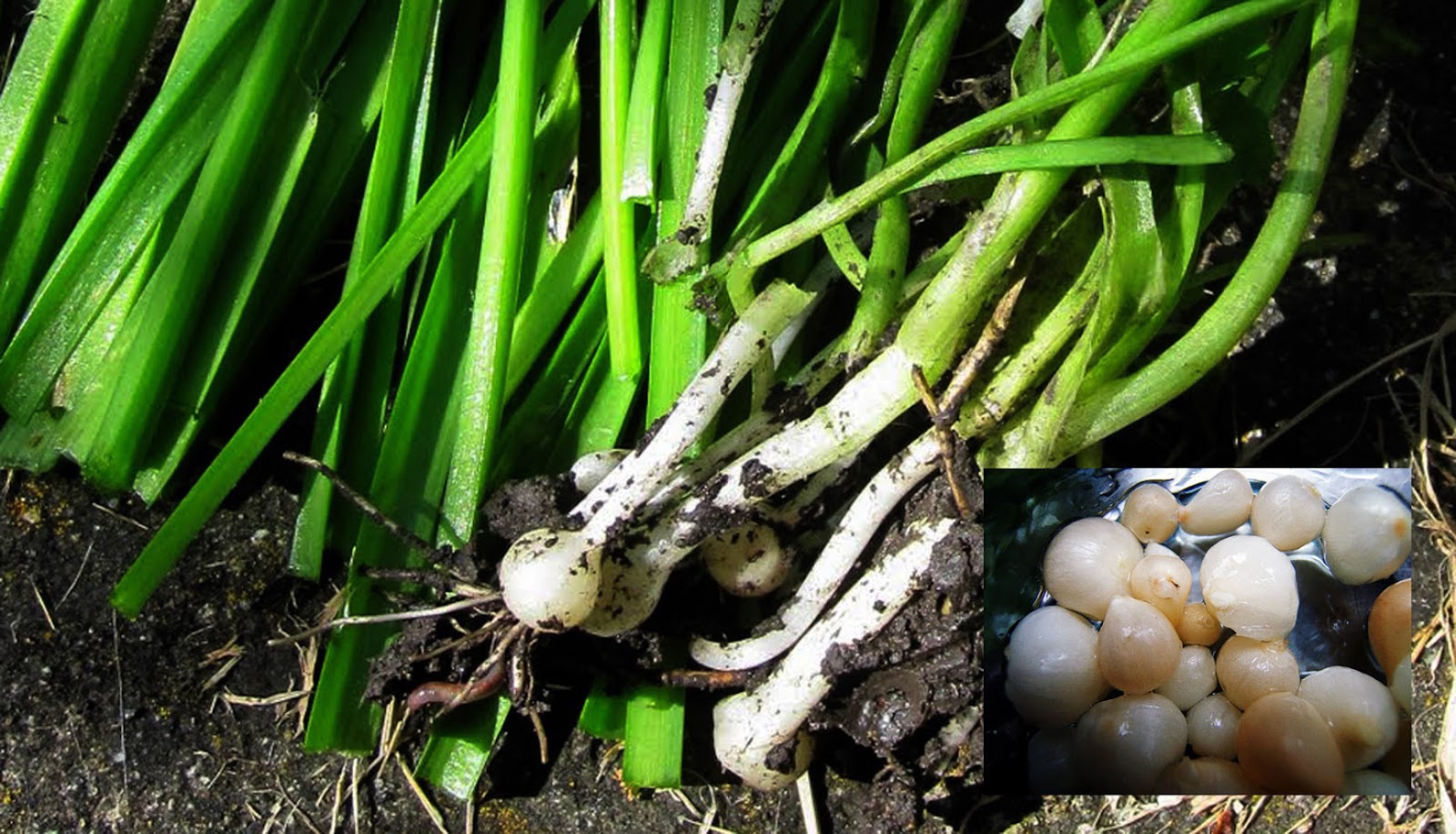
The three-cornered leek (Allium triquetrum) is an invasive weed in the Amaryllidaceae family, which is native to the Mediterranean and which can carpet large areas very quickly because of its rapidly germinating seeds that quickly form a dense clump of leaves and flowers. Both the English name and the specific epithet triquetrum refer to the three-cornered shape of the flower stalks. In New Zealand this plant is known as "onion weed".

Pretty though this three-cornered leek may be, don't be tempted to pick it as a cut flower because it does reek strongly of an oniony smell! However, you can pick it for eating, as all parts of the plant are edible. The leaves and flowers can be added to salads, and the bulbs can be substituted for garlic. The taste can be described as subtly flavoured like a leek or a spring onion. It may be consumed raw or cooked.

This post is part of the Floral Friday Fotos meme.


Thursday, 14 June 2018

BLACK NIGHTSHADE

European black nightshade (Solanum nigrum) or locally just 'black nightshade', duscle, garden nightshade, garden huckleberry, hound's berry, petty morel, wonder berry, small-fruited black nightshade, or popolo) is a species in the Solanum genus, native to Eurasia and introduced in the Americas, Australasia, and South Africa. Parts of this plant can be toxic to livestock and humans. Nonetheless, ripe berries and cooked leaves of edible strains are used as food in some locales, and plant parts are used as a traditional medicine. A tendency exists in literature to incorrectly refer to many of the other "black nightshade" species as "Solanum nigrum".

Solanum nigrum has been recorded from deposits of the Palaeolithic and Mesolithic era of ancient Britain and it is suggested by the botanist and ecologist Edward Salisbury that it was part of the native flora there before Neolithic agriculture emerged. The species was mentioned by Pliny the Elder in the first century AD and by the great herbalists, including Dioscorides. In 1753, Carl Linnaeus described six varieties of Solanum nigrum in 'Species Plantarum'.

Black nightshade is a common herb or short-lived perennial shrub, found in many wooded areas, as well as disturbed habitats. It reaches a height of 30 to 120 cm, leaves 4.0 to 7.5 cm long and 2 to 5 cm wide; ovate to heart-shaped, with wavy or large-toothed edges; both surfaces hairy or hairless; petiole 1 to 3 cm long with a winged upper portion. The flowers have petals greenish to whitish, recurved when aged and surround prominent bright yellow anthers. The berry is mostly 6 to 8 mm in diam., dull black or purple-black. In India, another strain is found with berries that turn red when ripe. Sometimes S. nigrum is confused for the more toxic deadly nightshade, Atropa belladonna, which is in a different Solanaceae genus altogether. A comparison of the fruit shows that the black nightshade berries grow in bunches, the deadly nightshade berries grow individually.

Solanine levels in S. nigrum can be toxic. Children have died from poisoning after eating unripe berries. However, the plant is rarely fatal, with ripe berries causing symptoms of mild abdominal pains, vomiting, and diarrhoea. Poisoning symptoms are typically delayed for 6 to 12 hours after ingestion. Initial symptoms of toxicity include fever, sweating, vomiting, abdominal pain, diarrhoea, confusion, and drowsiness. Death from ingesting large amounts of the plant results from cardiac arrhythmias and respiratory failure. Livestock have also been poisoned from nitrate toxicity by grazing the leaves of S. nigrum. All kinds of animals can be poisoned after ingesting nightshade, including cattle, sheep, poultry, and swine.

Nevertheless, S. nigrum has been widely used as a food since early times, and the fruit was recorded as a famine food in 15th-century China. Despite toxicity issues with some forms, the ripe berries and boiled leaves of edible strains are eaten. The thoroughly boiled leaves (although strong and slightly bitter flavoured) are used like spinach as horta (see here) and in fataya pies and quiches. The ripe black berries are described as sweet and salty, with hints of liquorice and melon. In South India, the leaves and berries are routinely consumed as food after cooking with tamarind, onion, and cumin seeds.

If you decide to pick and consume black nightshade, ensure you know that you are picking the right plant and also that you are preparing it correctly!

The plant has a long history of medicinal usage, dating back to ancient Greece. In the fourteenth century, the plant under the name of Petty Morel was being used for "canker" and with Horehound and wine taken for "dropsy". It was a traditional European medicine used as a strong sudorific, analgesic and sedative with powerful narcotic properties, but was considered a "somewhat dangerous remedy". Internal use has fallen out of favour in Western herbalism due to its variable chemistry and toxicity, but it is used topically as a treatment for herpes zoster. In the language of flowers, a sprig of flowering black nightshade signifies "truth".

This post is part of the Floral Friday Fotos meme.


Wednesday, 23 May 2018

TIGER LILY

Lilium (members of which are true lilies) is a genus of herbaceous flowering plants growing from bulbs, all with large prominent flowers. Lilies are a group of flowering plants which are important in culture and literature in much of the world. Most species are native to the temperate northern hemisphere, though their range extends into the northern subtropics. Many other plants have "lily" in their common name but are not related to true lilies.

The Tiger Lily, bears large, fiery orange flowers covered by spots. The name tiger probably refers to the spots on the petals. The flowers of this perennial can grow up to three inches in width. The Tiger Lily is also known as the Ditch Lily as it is found in and around ditches in large parts of America. This lily has a strong, sweet and distinctive smell. Besides producing a stunning spectacle, most parts of this plant are edible.

There are two varieties of the Tiger Lily: The Oriental Variety, which propagates through bulbs that form at leaf axils; and the Common Wildflower Variety, which propagates by tuberous roots. Due to its wild growing nature, the Tiger Lily is incredibly easy to grow. It thrives in moist to wet soils and hence grows well near ditches. Early to mid-autumn is the best time to plant out the bulbs in cool temperate areas, in warmer areas they can be planted out as late as late autumn.

The Tiger Lily is sterile and does not produce seeds. It can, however, be propagated through the bulbils (small bulbs) that grow in the axils of the leaves. Bulb scales can be removed from the bulbils and grown in moist peat in a cool dark place until they produce bulbets. They can be then grown in a nursery and later planted outside.

This post is part of the Wordless Wednesday meme,
and also part of the ABC Wednesday meme,
and also part of the Nature Notes meme.

Thursday, 4 January 2018

SUNFLOWERS

Helianthus annuus, the common sunflower, is a large annual forb of the genus Helianthus (family Asteraceae) grown as a crop for its edible oil and edible fruits (sunflower seeds). This sunflower species is also used as bird food, as livestock forage (as a meal or a silage plant), and in some industrial applications. The plant was first domesticated in the Americas. 

Wild Helianthus annuus is a widely branched annual plant with many flower heads. The domestic sunflower, however, often possesses only a single large inflorescence (flower head) atop an unbranched stem. The name sunflower may derive from the flower's head's shape, which resembles the sun, or from the false impression that the blooming plant appears to slowly turn its flower towards the sun as the latter moves across the sky on a daily basis.

Sunflower seeds were brought to Europe from the Americas in the 16th century, where, along with sunflower oil, they became a widespread cooking ingredient. The plant has an erect rough-hairy stem, reaching typical heights of 3 metres. The tallest sunflower on record achieved 9.17 metres.

Sunflower leaves are broad, coarsely toothed, rough and mostly alternate. What is often called the "flower" of the sunflower is actually a "flower head" or pseudanthium of numerous small individual five-petaled flowers ("florets"). The outer flowers, which resemble petals, are called ray flowers. Each "petal" consists of a ligule composed of fused petals of an asymmetrical ray flower. They are sexually sterile and may be yellow, red, orange, or other colours.

The flowers in the centre of the head are called disk flowers. These mature into fruit (sunflower "seeds"). The disk flowers are arranged spirally. Generally, each floret is oriented toward the next by approximately the golden angle, 137.5°, producing a pattern of interconnecting spirals, where the number of left spirals and the number of right spirals are successive Fibonacci numbers.

Typically, there are 34 spirals in one direction and 55 in the other; however, in a very large sunflower head there could be 89 in one direction and 144 in the other. This pattern produces the most efficient packing of seeds mathematically possible within the flower head. The angle 137.5° is related to the golden ratio (55/144 of a circular angle, where 55 and 144 are Fibonacci numbers) and gives a close packing of florets. This model has been used to produce computer graphics representations of sunflowers!

This post is part of the Floral Friday Fotos meme.

Thursday, 14 September 2017

THREE-CORNERED LEEK

The three-cornered leek (Allium triquetrum) is an invasive weed in the Amaryllidaceae family, which is native tot he Mediterranean and which can carpet large areas very quickly because of its rapidly germinating seeds that quickly form a dense clump of leaves and flowers. Both the English name and the specific epithet triquetrum refer to the three-cornered shape of the flower stalks.

Pretty though this three-cornered leek may be, don't be tempted to pick it as a cut flower because it does reek strongly of an oniony smell! However, you can pick it for eating, as all parts of the plant are edible. The leaves and flowers can be added to salads, and the bulbs can be substituted for garlic. The taste can be described as subtly flavoured like a leek or a spring onion. It may be consumed raw or cooked.

This post is part of the Floral Friday Fotos meme,
and also part of the Weekend Green meme.


Thursday, 20 July 2017

FRAGRANT VIOLETS

Viola is a genus of flowering plants in the violet family Violaceae. It is the largest genus in the family, containing between 525 and 600 species. Most species are found in the temperate Northern Hemisphere, however some are also found in widely divergent areas such as Hawaii, Australasia, and the Andes. Some Viola species are perennial plants, some are annual plants, and a few are small shrubs.

A large number of species, varieties and cultivars are grown in gardens for their ornamental flowers. In horticulture the term "pansy" is normally used for those multi-coloured, large-flowered cultivars which are raised annually or biennially from seed and used extensively in bedding. The terms "viola" and "violet" are normally reserved for small-flowered annuals or perennials, including the type species.

Viola odorata is a species of the genus Viola native to Europe and Asia, but has also been introduced to North America and Australia. It is commonly known as wood violet, sweet violet, English violet, common violet, florist's violet, or garden violet.

The sweet scent of this flower has proved popular throughout the generations particularly in the late Victorian period, and has consequently been used in the production of many cosmetic fragrances and perfumes. The scent of violet flowers is distinctive with only a few other flowers having a remotely similar odour. References to violets and the desirable nature of the fragrance go back to classical sources such as Pliny and Horace when the name ‘Ion’ was in use to describe this flower from which the name of the distinctive chemical constituents of the flower, the ionones – is derived. The leaves are edible and contain mucilage.

This post is part of the Floral Friday Fotos meme.


Thursday, 18 May 2017

CHRYSANTHEMUM

Although once referred to as Dendranthema, the florists chrysanthemum is now correctly known under its old name. There are about 40 species in the genus Chrysanthemum, mainly from East Asia. In China, where they have been cultivated for over 2,500 years, the chrysanthemum was used medicinally and for flavouring, as well as for ornament. The flower is also significant in Japan where it is a symbol of happiness and longevity, and the royal family has ruled for 2,600 years from the Chrysanthemum Throne.

The annual species are referred to Xanthophthalmum and are mainly used for summer bedding or as fillers in borders of perennial flowers. Most chrysanthemums are upright plants with lobed leaves that can be aromatic. The many showy flowerheads, carried at the tips of strong stems, begin to bloom as the days shorten. In the Southern Hemisphere, they bloom in May and are associated with Mother's Day.

Florists chrysanthemums (Chrysanthemum grandiflorum) are grouped according to form: Irregular incurved, reflexed, regular incurved, intermediate incurved, pompon, single and semi-double, anemone, spoon, quill, spider, brush or thistle, and unclassified, which is a catch-all group for blooms not yet classified or not falling into one of the existing groups.

Florists chrysanthemums prefer a heavier richer soil in a sunny position, though they like a spot that offers some afternoon shade. The plants require training and trimming to produce their best flowers. Pinch back when young and disbud to ensure the best flower show. Propagate by division when dormant or from half-hardened summer cuttings.

This post is part of the Floral Friday Fotos meme,
and also part of the Orange you Glad It's Friday meme.

Thursday, 20 April 2017

CANOLA FLOWERS

Brassica rapa L. is a plant consisting of various widely cultivated subspecies including the turnip (a root vegetable); napa cabbage, bomdong, bok choy, and cime di rapa (leaf vegetables) and (Brassica rapa subsp. oleifera, an oilseed which has many common names, including field mustard, bird rape, keblock, and colza).

Brassica rapa is also known as Wisconsin Fast Plants. The oil made from the seed is sometimes also called canola, which is one reason why it is sometimes confused with rapeseed oil, but this comes from a different Brassica species (Brassica napus). The oilseeds known as canola are sometimes particular varieties of Brassica rapa (termed Polish Canola) but usually the related species Brassica napus (rapeseed) and Brassica juncea (mustard greens and mizuna)

This post is part of the Floral Friday Fotos meme.


Thursday, 19 January 2017

SUNFLOWER

Helianthus annuus, the common sunflower, is a large annual forb of the genus Helianthus in the family Asteraceae, grown as a crop for its edible oil and edible fruits (sunflower seeds). This sunflower species is also used as bird food, as livestock forage (as a meal or a silage plant), and in some industrial applications.

The plant was first domesticated in the Americas. Wild Helianthus annuus is a widely branched annual plant with many flower heads. The domestic sunflower, however, often possesses only a single large inflorescence (flower head) atop an unbranched stem.

The name sunflower may derive from the shape of the flower head, which resembles the sun, or from the impression that the blooming plant appears to slowly turn its flower towards the sun as the latter moves across the sky on a daily basis. Sunflower seeds were brought to Europe from the Americas in the 16th century, where, along with sunflower oil, they became a widespread cooking ingredient.

This post is part of the Skywatch Friday meme,
and also part of the Floral Friday Fotos meme.