Showing posts with label floral_friday. Show all posts

Thursday, 3 December 2020

CAMPANULA

Campanula is one of several genera in the family Campanulaceae with the common name bellflower. It takes both its common and its scientific name from its bell-shaped flowers —campanula is Latin for "little bell". The genus includes over 500 species and several subspecies, distributed across the temperate and subtropical regions of the Northern Hemisphere, with the highest diversity in the Mediterranean region east to the Caucasus.

Campanula persicifolia (peach-leaved bellflower, shown here) is a herbaceous perennial growing to 1 m. Its flowers are cup-shaped and can be either lilac-blue or white. Its foliage is narrow and glossy with a bright green appearance. It is common in the Alps and other mountain ranges in Europe. It grows at lower altitudes in the north, and higher up further south, passing 1,500 m in Provence.

Normally it flowers in June; a dry summer may reduce or inhibit its flowering. Despite this it can flower as late as September in a cold year. The natural habitat of this plant is broad-leaved forests, woodland margins, rocky outcrops in broad-leaved woods, meadows and banks.

This post is part of the Floral Friday Fotos meme


Thursday, 20 December 2018

ORIENTAL LILY

Lilium (members of which are true lilies) is a genus of herbaceous flowering plants growing from bulbs, all with large prominent flowers. Lilies are a group of flowering plants which are important in culture and literature in much of the world. Most species are native to the temperate northern hemisphere, though their range extends into the northern subtropics. Many other plants have "lily" in their common name but are not related to true lilies.

Lilies are tall perennials ranging in height from 60–180 cm. They form naked or tunicless scaly underground bulbs which are their organs of perennation. In some North American species the base of the bulb develops into rhizomes, on which numerous small bulbs are found. Some species develop stolons. Most bulbs are buried deep in the ground, but a few species form bulbs near the soil surface. Many species form stem-roots. With these, the bulb grows naturally at some depth in the soil, and each year the new stem puts out adventitious roots above the bulb as it emerges from the soil. These roots are in addition to the basal roots that develop at the base of the bulb.

The flowers are large, often fragrant, and come in a wide range of colours including whites, yellows, oranges, pinks, reds and purples. Markings include spots and brush strokes. The plants are late spring- or summer-flowering. Flowers are borne in racemes or umbels at the tip of the stem, with six tepals spreading or reflexed, to give flowers varying from funnel shape to a "Turk's cap". The tepals are free from each other, and bear a nectary at the base of each flower. The ovary is 'superior', borne above the point of attachment of the anthers. The fruit is a three-celled capsule.

Oriental lilies are based on hybrids within the Lilium section, specifically Lilium auratum and Lilium speciosum, together with crossbreeds from several species native to Japan, including Lilium nobilissimum, Lilium rubellum, Lilium alexandrae, and Lilium japonicum. They are fragrant, and the flowers tend to be outward facing. Plants tend to be tall, and the flowers may be quite large. The whole group are sometimes referred to as "stargazers" because many of them appear to look upwards.

This post is part of the Floral Friday Fotos meme.

Thursday, 29 March 2018

BLUE WATER LILY

Nymphaea violacea, also known as blue lily, is a waterlily in the family NymphaeaceaeNymphaea violacea is found in Australia, particularly in the Kimberleys and in northern parts of Queensland and the Northern Territory. The flowers are violet, blue or white.

Nymphaea violacea is a floating perennial herb growing from a rhizome in the mud of the pond base. Leaves are broadly egg-shaped to circular with a split at the base to the point of the stalk attachment, 6-29 cm x 7-23 cm, dark green above, purplish or paler green beneath, smooth. The leaf margins are wavy but not toothed.

The waterlily is a bush tucker of the Aborigines in northern Australia. The tuber, stem, flowers and seeds are all edible.

This post is part of the Floral Friday Fotos meme.


Thursday, 26 October 2017

DOGWOOD

Cornus is a genus of about 30–60 species of woody plants in the family Cornaceae, commonly known as dogwoods, which can generally be distinguished by their blossoms, berries, and distinctive bark. Most are deciduous trees or shrubs, but a few species are nearly herbaceous perennial subshrubs, and a few of the woody species are evergreen.

Several species have small heads of inconspicuous flowers surrounded by an involucre of large, typically white petal-like bracts, while others have more open clusters of petal-bearing flowers. The various species of dogwood are native throughout much of temperate and boreal Eurasia and North America, with China and Japan and the southeastern United States particularly rich in native species.

Species include the common dogwood Cornus sanguinea of Eurasia, the widely cultivated flowering dogwood (Cornus florida) of eastern North America, the Pacific dogwood Cornus nuttallii of western North America, the Kousa dogwood Cornus kousa of eastern Asia, and two low-growing boreal species, the Canadian and Eurasian dwarf cornels (or bunchberries), Cornus canadensis and Cornus suecica respectively. Depending on botanical interpretation, the dogwoods are variously divided into one to nine genera or subgenera.

This post is part of the Floral Friday Fotos meme.


Thursday, 25 May 2017

ORANGE ROSES

These magnificent orange roses were for sale at our neighbourhood florist shop. The florist didn't know exactly which cultivar they are, however, He suspected they were either 'Milva' or 'Fiction'.

This post is part of the Floral Friday Fotos meme,
and also part of the Friday Photo Journal.
and also part of the Orange you Glad It's Friday meme.


Thursday, 23 March 2017

BEAUTIFUL BEGONIA

Begonia coccinea is a species of plant in the Begoniaceae family. It is native to the Atlantic Forest of Brazil. There are many hybrids developed from this species and all of them are tall, shade-loving plants, also called collectively "cane begonias". They are popularly grown as ornamentals because of their beautifully shaped and colourful foliage and flowers.

This post is part of the Floral Friday Fotos meme.


Thursday, 2 February 2017

GAILLARDIA

Gaillardia or blanket flowers, are perennial daisies in the Asteraceae family. They are valued for their extended flowering season, blooming from early spring until late summer. The plants consist of low-growing, light-green foliage, and bear upright stems with large daisy-type flowers, most commonly in shades of yellow, orange, red and brown.

Gaillardia are hardy and require little maintenance once established. They are stunning in meadow gardens, rockeries, or used as filler or border plants. They are attractive to bees and butterflies and regular removal of the faded flowers will encourage constant blooming. 

Gaillardia galya offers a new range of single-flowering varieties. Flowers are produced in 
profusion on each individual plant – resulting in a stunning ball of colour in the garden. The continuous flowering of this series ensures the colour will last for months.They are available with a variety of different orange, yellow and red blooms. This particular one is the "Arizona Sun" hybrid.

This post is part of the Floral Friday Fotos meme,
and also part of the Orange you Glad It's Friday meme.

Thursday, 12 January 2017

SUNFLOWERS

Helianthus or sunflowers (from the Greek: ήλιος, Hēlios, "sun" and ανθός, anthos, "flower") is a genus of plants comprising about 70 species in the family Asteraceae. The genus is one of many in the Asteraceae that are known as sunflowers. Except for three species in South America, all Helianthus species are native to North America.

The common name, "sunflower", typically refers to the popular annual species Helianthus annuus, the common sunflower (shown here), whose round flower heads in combination with the ligules look like the sun. This and other species, notably Jerusalem artichoke (H. tuberosus), are cultivated in temperate regions as food crops and ornamental plants. The largest sunflower field is located in Tuscany, Italy.

The domesticated sunflower, H. annuus, is the most familiar species. Perennial sunflower species are not as popular for gardens due to their tendency to spread rapidly and become invasive. Whorled sunflowers, H. verticillatus, were listed as an endangered species in 2014 when the U.S. Fish and Wildlife Service issued a final rule protecting it under the Endangered Species Act. The primary threats are industrial forestry and pine plantations in Alabama, Georgia, and Tennessee. They grow to 1.8 m and are primarily found in woodlands, adjacent to creeks and moist, prairie-like areas.

This post is part of the Floral Friday Fotos meme.

Thursday, 5 January 2017

FLOWERING RUSHES

Juncus is a genus of monocotyledonous flowering plants, commonly known as rushes. It is the largest genus in the family Juncaceae, containing around 300 species.  Juncus has a cosmopolitan distribution, with species found throughout the world, with the exception of Antarctica. They typically grow in cold or wet habitats, and in the tropics, are most common in montane environments.

Rushes of the genus Juncus are herbaceous plants that superficially resemble grasses or sedges. The form of the flower differentiates rushes from grasses or sedges. The flowers of Juncus comprise five whorls of floral parts: three sepals, three petals (or, taken together, six tepals), two to six stamens (in two whorls) and a stigma with three lobes. The stems are round in cross-section, unlike those of sedges, which are typically somewhat triangular in cross-section.

This post is part of the Floral Friday Fotos meme,
and also part of the Friday Greens meme.


Thursday, 29 December 2016

ARTICHOKE FLOWERS

The globe artichoke (Cynara cardunculus var. scolymus) is a variety of a species of thistle cultivated as a food. The edible portion of the plant consists of the flower buds before the flowers come into bloom. The budding artichoke flower-head is a cluster of many budding small flowers (an inflorescence) together with many bracts, on an edible base. Once the buds bloom (as seen here), the structure changes to a coarse, barely edible form. Another variety of the species is the cardoon, a perennial plant native to the Mediterranean region. Both wild forms and cultivated varieties (cultivars) of artichoke exist.

This post is part of the Floral Friday Fotos meme,
and also part of the Friday Greens meme.

Monday, 26 December 2016

CORNFLOWER

Centaurea cyanus, commonly known as cornflower, is an annual flowering plant in the family Asteraceae, native to Europe. In the past it often grew as a weed in cornfields (in the broad sense of the word "corn", referring to grains, such as wheat, barley, rye, or oats), hence its name. It is now endangered in its native habitat by agricultural intensification, particularly over-use of herbicides, destroying its habitat; in the United Kingdom it has declined from 264 sites to just 3 sites in the last 50 years. In reaction to this, the conservation charity Plantlife named it as one of 101 species it would actively work to bring 'Back from the Brink'. It is also, however, through introduction as an ornamental plant in gardens and a seed contaminant in crop seeds, now naturalised in many other parts of the world, including North America and parts of Australia.

This post is part of the Blue Monday meme,
and also part of the Macro Monday meme,
and also part of the Through my Lens meme,
and also part of the Seasons meme.

Friday, 16 December 2016

HAWKWEED

Hieracium known by the common name hawkweed and classically as hierakion (from ancient Greek ιεράξ, hierax 'hawk'), is a genus of the sunflower family Asteraceae, and closely related to dandelion (Taraxacum), chicory (Cichorium), prickly lettuce (Lactuca) and sow thistle (Sonchus), which are all part of the tribe Cichorieae. Hawkweeds, with their 10,000+ recorded species and subspecies, do their part to make Asteraceae the second largest family of flowers. Some botanists group all these species or subspecies into approximately 800 accepted species, while others prefer to accept several thousand species.

This post is part of the Friday Greens meme,
and also part of the Floral Friday Fotos meme.

Thursday, 15 December 2016

KANGAROO PAW

Anigozanthos is a small genus of Australian plants in the Bloodwort family Haemodoraceae. The 11 species and several subspecies are commonly known as kangaroo paw and catspaw depending on the shape of their flowers. A further species, previously identified as Anigozanthos fuliginosus and commonly known as the black kangaroo paw, has been transferred to its own monotypic genus and is now known as Macropidia fuliginosa.

The genus was first named by Jacques Labillardière in his work, Relation du Voyage à la Recherche de la Pérouse, issued in 1800. The French botanist collected and described the type species, Anigozanthus rufus, during the d'Entrecasteaux expedition's visit to Southwest Australia in 1792. In recent years a number of numerous hybrids and cultivars have been developed. Kangaroo paws are much in demand as house plants and as cut flowers.

These perennials are endemic to dry sandy, siliceous areas of southwest Australia, but they occur as well in a variety of other environments and soil types. They are grown commercially in Australia, the United States, Japan and Israel. The plant grows from short, underground, horizontal rhizomes. The length and the character of these may vary between the species: some are fleshy, others are fragile. The sap in the root system allows the plants to survive extreme dry spells. In summer, a number of species die back to the rhizome, growing back in autumn.

The tuberous flower buds are covered with coloured hairs, giving them a velvety aspect. These long furry hairs also determine the colour of the flower, which may range from almost black to yellow, orange and red. Some species are even dichromatic (as Anigozanthos manglesii). The tubular form of the flower bud resembles a kangaroo paw, hence its name. The flower tip spreads fanlike into six petals. Full-grown plants can have up to ten flowers at the end of each stalk.

This post is part of the Floral Friday Fotos meme,
and also part of the Friday Greens meme.


Thursday, 8 December 2016

DIGIPLEXIS

Digiplexis ‘Illumination Flame’ is an award-winning foxglove hybrid that produces large multicoloured blooms from mid-Spring until first frost. ‘Illumination Flame’ was bred by Charles Valin at Thompson & Morgan in the United Kingdom and is a cross between Digitalis and the Mediterranean shrub Isoplexis. The ground-breaking new hybrid resulted in a well basal branched, vigorous, beautifully coloured and long blooming foxglove.

The real breeding breakthrough is unlike Digitalis, which bloom for a few weeks, Digiplexis flowers for several months. Flowering begins in the mid spring and continues throughout the summer and until the first hard frost. Digiplexis grows numerous spikes with, as its name implies, flame coloured sterile blossoms. The 2-inch tubular, hooded flowers have rich fuchsia-pink tones on the outside, while the inside of the blooms transition from fuchsia pink to golden apricot throats streaked with lavender spots.

Digiplexis ‘Illumination Flame’ is vegetatively cultivated by means of tissue culture. Propagation is done by a limited number of licensed propagators and self-propagation is strictly prohibited. The blossoms are sterile hybrids and do not produce seeds.

Digiplexis can be grown as a perennial throughout USDA Hardiness Zones 8 to 11. However, with its long bloom time, don’t underestimate its value as an annual, tender perennial or a spectacular container plant in colder climates. It prefers locations with partial to full sun and grows to about 1 metre tall when in full bloom.

This post is part of the Floral Friday Fotos meme,
and also part of the Orange you Glad It's Friday meme.

Thursday, 1 December 2016

BLACKBERRY FLOWERS

The blackberry is an edible fruit produced by many species in the Rubus genus in the Rosaceae family, hybrids among these species within the Rubus subgenus, and hybrids between the Rubus and Idaeobatus subgenera. The taxonomy of the blackberries has historically been confused because of hybridisation and apomixis, so that species have often been grouped together and called species aggregates. For example, the entire subgenus Rubus has been called the Rubus fruticosus aggregate, although the species R. fruticosus is considered a synonym of R. plicatus!

The flowers are produced in late spring and early summer on short racemes on the tips of the flowering laterals. Each flower is about 2–3 cm in diameter with five white or pale pink petals. Blackberries grow wild throughout most of Europe. They are an important element in the ecology of many countries, and harvesting the berries is a popular pastime. However, the plants are also considered a weed, sending down roots from branches that touch the ground, and sending up suckers from the roots. In some parts of the world without native blackberries, such as in Australia, Chile, New Zealand, and the Pacific Northwest of North America, some blackberry species, particularly Rubus armeniacus (Himalayan Blackberry) and Rubus laciniatus (Evergreen Blackberry), are naturalised and considered an invasive species and a serious weed.

This post is part of the Floral Friday Fotos meme,
and also part of the Friday Greens meme.

Friday, 25 November 2016

HONEY BUSH

Melianthus major (giant honey flower or Kruidjie-roer-my-nie) is a species of flowering plant in the family Melianthaceae. It is an evergreen suckering shrub, endemic to South Africa and naturalised in India, Australia and New Zealand.

It grows to 2–3 m tall by 1–3 m wide, with pinnate blue-green leaves 30–50 cm long, which have a distinctive, unpleasant odour. Dark red, nectar-laden flower spikes, 30–80 cm in length, appear in spring, followed by green pods.

All parts of the plants are poisonous. The Latin binomial Melianthus major literally means "large honey flower". In cultivation this plant requires a sheltered location and may also need a protective winter mulch in temperate regions. It has gained the Royal Horticultural Society's Award of Garden Merit.

This post is part of the Floral Friday Fotos meme,
and also part of the Friday Greens meme.


Thursday, 24 November 2016

RED POPPY

Papaver rhoeas (common names include common poppy, corn poppy, corn rose, field poppy, Flanders poppy or red poppy) is an annual herbaceous species of flowering plant in the poppy family, Papaveraceae. This poppy is notable as an agricultural weed (hence the common names including "corn" and "field") and after World War I as a symbol of dead soldiers. Before the advent of herbicides, P. rhoeas sometimes was so abundant in agricultural fields that it could be mistaken for a crop. However, the only species of Papaveraceae grown as a field crop on a large scale is Papaver somniferum, the opium poppy.

Papaver rhoeas is a variable, erect annual, forming a long-lived soil seed bank that can germinate when the soil is disturbed. In the northern hemisphere it generally flowers in late spring, but if the weather is warm enough other flowers frequently appear at the beginning of autumn. It grows up to about 70 cm in height. The flowers are large and showy, 50 to 100mm across, with four petals that are vivid red, most commonly with a black spot at their base. The flower stem is usually covered with coarse hairs that are held at right angles to the surface, helping to distinguish it from Papaver dubium in which the hairs are more usually appressed (i.e. held close to the stem). The capsules are hairless, obovoid (egg-shaped), less than twice as tall as they are wide, with a stigma at least as wide as the capsule. Like many other species of Papaver, the plant exudes white to yellowish latex when the tissues are broken

Its origin is not known for certain. As with many such plants, the area of origin is often ascribed by Americans to Europe, and by northern Europeans to southern Europe. Its native range includes West Asia, North Africa and Europe. It is known to have been associated with agriculture in the Old World since early times and has had an old symbolism and association with agricultural fertility. It has most of the characteristics of a successful weed of agriculture. These include an annual lifecycle that fits into that of most cereals, a tolerance of simple weed control methods, the ability to flower and seed itself before the crop is harvested, and the ability to form a long-lived seed bank. The leaves and latex have an acrid taste and are mildly poisonous to grazing animals. A sterile hybrid with Papaver dubium is known, P. x hungaricum, that is intermediate in all characters with P. rhoeas.

Due to the extent of ground disturbance in warfare during World War I, corn poppies bloomed in between the trench lines and no man's lands on the Western front. Poppies are a prominent feature of "In Flanders Fields" by Canadian Lieutenant Colonel John McCrae, one of the most frequently quoted English-language poems composed during the First World War. During the 20th century, the wearing of a poppy at and before Remembrance Day each year became an established custom in English-speaking western countries. It is also used at some other dates in some countries, such as at appeals for Anzac Day in Australia and New Zealand.

This post is part of the Floral Friday Fotos meme,
and also part of the Friday Greens meme.


Friday, 18 November 2016

Thursday, 17 November 2016

BLUE LITHODORA

Lithodora diffusa ‘Grace Ward’ (also called blue lithospermum, USDA Zone: 5-9) in the Boraginaceae family is a choice groundcover or rock garden plant, making an unforgettable display when grown well. Plants form a low, creeping mat of hairy dark-green leaves, studded with sapphire-blue star flowers from late spring through summer. Plants must have a well-drained, acidic soil in order to thrive. Heavy clay soils are sure death. In colder regions this plant will benefit from a light covering of evergreen boughs as soon as the soil is frozen in late Autumn. Combines well with heaths and heathers, since plants have similar requirements. Evergreen where hardy. Not especially vigorous.

This post is part of the Floral Friday Fotos meme,
and also part of the Friday Greens meme.


Friday, 11 November 2016

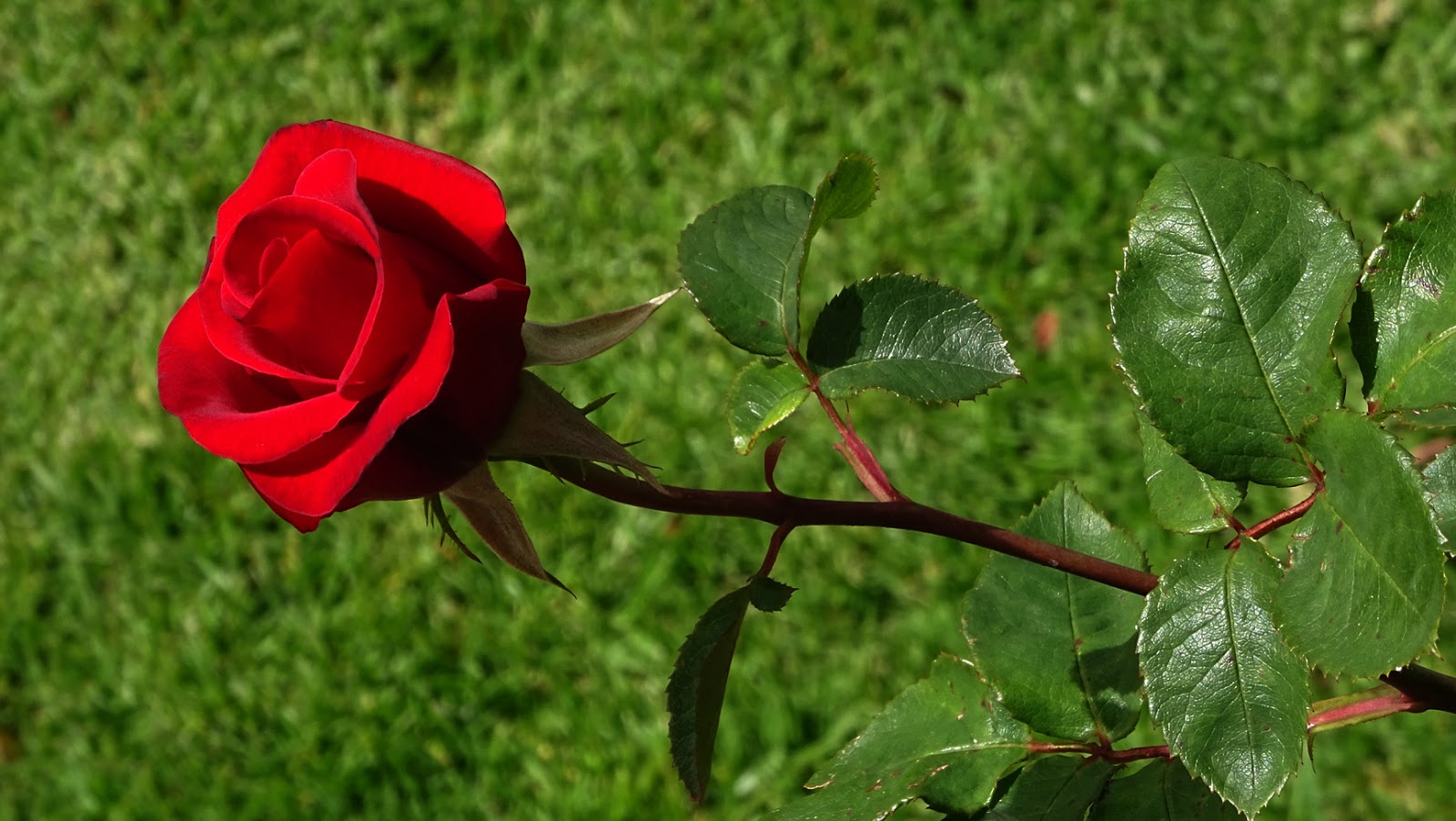
RED ROSE

"My love is like a red, red rose
That’s newly sprung in June:
My love is like the melody
That’s sweetly played in tune..."

This post is part of the Floral Friday Fotos meme,
and also part of the Friday Greens meme.