Tuesday, 17 March 2015

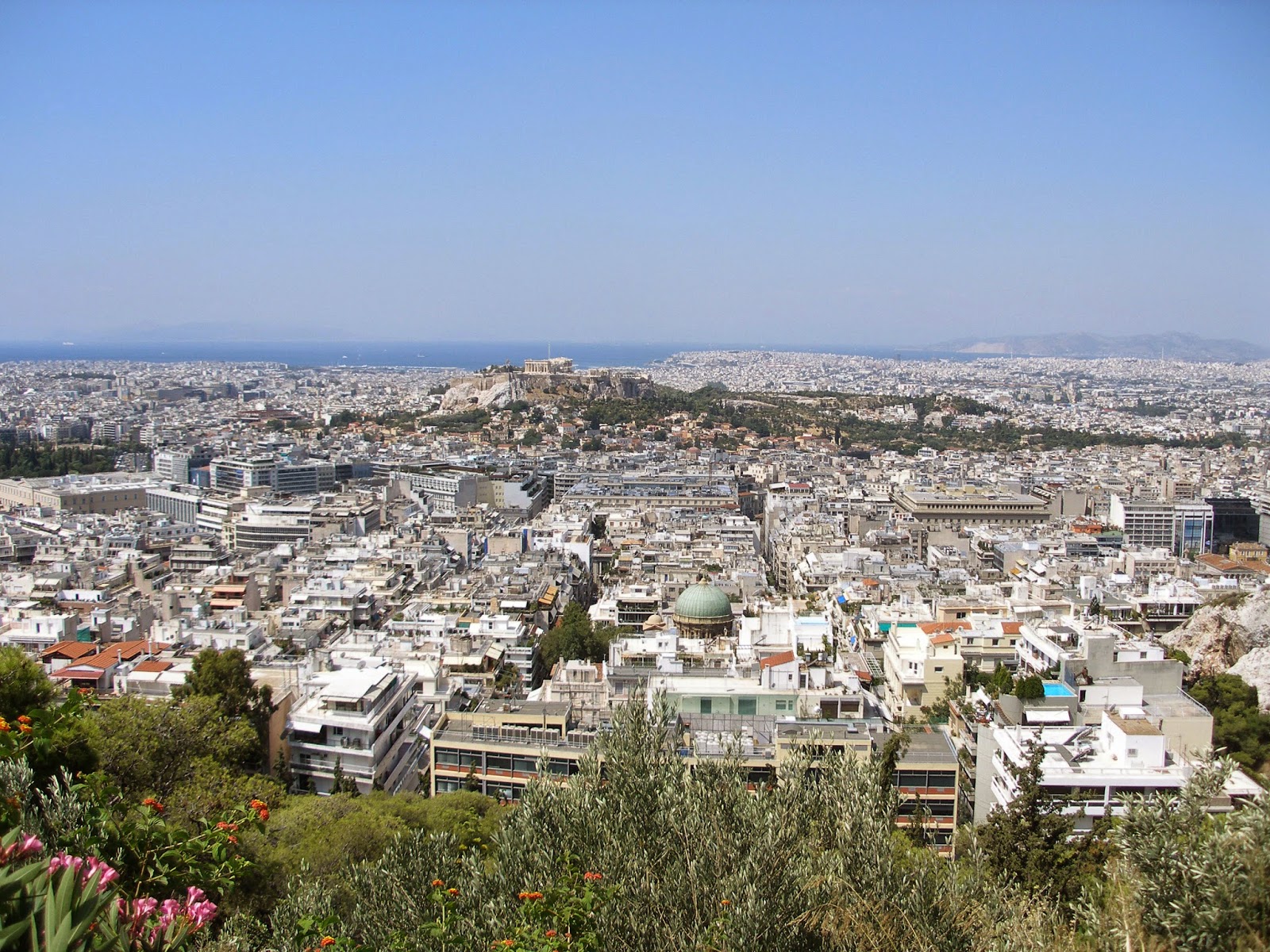
ATHENS PROMENADE

Athens (Modern Greek: Αθήνα, Athína; Ancient Greek: Ἀθῆναι, Athēnai) is the capital and largest city of Greece. Athens dominates the Attica region and is one of the world's oldest cities, with its recorded history spanning around 3,400 years, and the earliest human presence around the 11th–7th millennium BC. Classical Athens was a powerful city-state that emerged in conjunction with the seagoing development of the port of Piraeus. A centre for the arts, learning and philosophy, home of Plato's Academy and Aristotle's Lyceum, it is widely referred to as the cradle of Western civilisation and the birthplace of democracy, largely due to the impact of its cultural and political achievements during the 5th and 4th centuries BC on the rest of the then known European continent.

Today a cosmopolitan metropolis, modern Athens is central to economic, financial, industrial, political and cultural life in Greece. In 2012, Athens was ranked the world's 39th richest city by purchasing power and the 77th most expensive in a UBS study. Athens is recognised as a global city because of its geo-strategic location and its importance in finance, commerce, media, entertainment, arts, international trade, culture, education and tourism. It is one of the biggest economic centres in southeastern Europe, with a large financial sector, and features the largest passenger port in Europe, and the third largest in the world.

According to Eurostat in 2004, the Athens Larger Urban Zone (LUZ) was the 7th most populous LUZ in the European Union (the 5th most populous capital city of the EU), with a population of 4,013,368. Athens is also the southernmost capital on the European mainland. The heritage of the classical era is still evident in the city, represented by ancient monuments and works of art, the most famous of all being the Parthenon, considered a key landmark of early Western civilisation. The city also retains Roman and Byzantine monuments, as well as a smaller number of Ottoman monuments. Athens is home to two UNESCO World Heritage Sites, the Acropolis of Athens and the medieval Daphni Monastery.

Landmarks of the modern era, dating back to the establishment of Athens as the capital of the independent Greek state in 1834, include the Hellenic Parliament (19th century) and the Athens Trilogy, consisting of the National Library of Greece, the Athens University and the Academy of Athens. Athens was the host city of the first modern-day Olympic Games in 1896, and 108 years later it welcomed home the 2004 Summer Olympics. Athens is home to the National Archaeological Museum, featuring the world's largest collection of ancient Greek antiquities, as well as the new Acropolis Museum.

This post is part of the Our World Tuesday meme,
and also part of the Wordless Wednesday meme.


Monday, 16 March 2015

GERBERAS LIQUIDISED

I am testing out a new free image processing program for Macintosh called "Affinity". This is an alternative to the highly popular Photoshop. I must say that I am impressed! Of course after having used Photoshop for so long, becoming familiar with a new image processing interface will take some time, but I am willing to try as I do not wish to pay a monthly subscription to keep using Photoshop. Having just switched computers, I found to my horror that I could not use my (legal and licensed) copy of Photoshop on my new computer... So here's to Affinity!

This post is part of the Monday Mellow Yellows meme,
and also part of the Mandarin Orange Monday meme,
and also part of the Nature Footstep Digital Art Meme.


Sunday, 15 March 2015

NEA KAMENI, GREECE

Nea Kameni is a small uninhabited Greek island of volcanic origin located in the Aegean Sea within the flooded Santorini caldera. Nea Kameni and the neighbouring small island Palea Kameni (the "new burnt" and "old burnt" islands) have formed over the past two millennia by repeated eruptions of dacite lava and ash. The Roman historian Cassius Dio records in the year 47 AD "This year a small islet, hitherto unknown, made an appearance close to the island of Thera."

Major eruptions over the past 300 years took place in 1707–1712, 1866–1870, 1925–1928, and 1939-1941. The last small eruption happened in 1950 and involved lava dome extrusion. Nea Kameni is nearly round and has a diameter of approximately 2 kilometers and an area of 3.4 km2. Nea Kameni is monitored closely by scientists from the Institute for the Study and Monitoring of the Santorini Volcano (ISMOSAV) and is a protected scientific site.

The island has many active sulphur vents, as well as a carpet of red grassy succulents on the thin soil in the summertime. The nearly barren island is visited daily by dozens of tourist boats throughout the summer. Visitors climb a gravel path to reach the top of the 130-metre-high volcanic crater, where it is possible to complete a full circuit of the rim.

This post is part of the Scenic Weekends meme.


Friday, 13 March 2015

SKY IN A CAGE

This post is part of the Geometric Friday meme,
and also part of the Skywatch Friday meme.


OLIVES RIPENING

It has been a good year for olives (Olea europaea) in Melbourne this year and our olive tree in the back yard is absolutely laden with a heavy crop of fruit. It's a sure sign of Autumn when the olives begin to get darker and bigger on the tree...

This post is part of the Friday Greens meme.


Thursday, 12 March 2015

BOUGAINVILLEA

Bougainvillea is a genus of the Nyctaginaceae family that contains thorny ornamental vines, bushes, and trees with flower-like spring leaves near its flowers. Different authors accept between four and 18 species in the genus. They are native plants of South America from Brazil west to Perú and south to southern Argentina (Chubut Province). Bougainvillea are also known as buganvilla (Spain), bugambilia (Mexico), Napoleón (Honduras), veranera (Colombia, Nicaragua, El Salvador, Costa Rica and Panama), trinitaria (Colombia, Cuba, Panama, Puerto Rico, Dominican Republic & Venezuela), Santa Rita (Argentina, Bolivia, Brazil, Paraguay and Uruguay) or papelillo (northern Peru).

The vine species grow anywhere from 1 to 12 m tall, scrambling over other plants with their spiky thorns. The thorns are tipped with a black, waxy substance. They are evergreen where rainfall occurs all year, or deciduous if there is a dry season. The leaves are alternate, simple ovate-acuminate, 4–13 cm long and 2–6 cm broad. The actual flower of the plant is small and generally white, but each cluster of three flowers is surrounded by three or six bracts with the bright colours associated with the plant, including pink, magenta, purple, red, orange, white, or yellow. Bougainvillea glabra is sometimes referred to as "paper flower" because the bracts are thin and papery. The fruit is a narrow five-lobed achene.

This post is part of the Floral Friday Fotos meme.


Wednesday, 11 March 2015

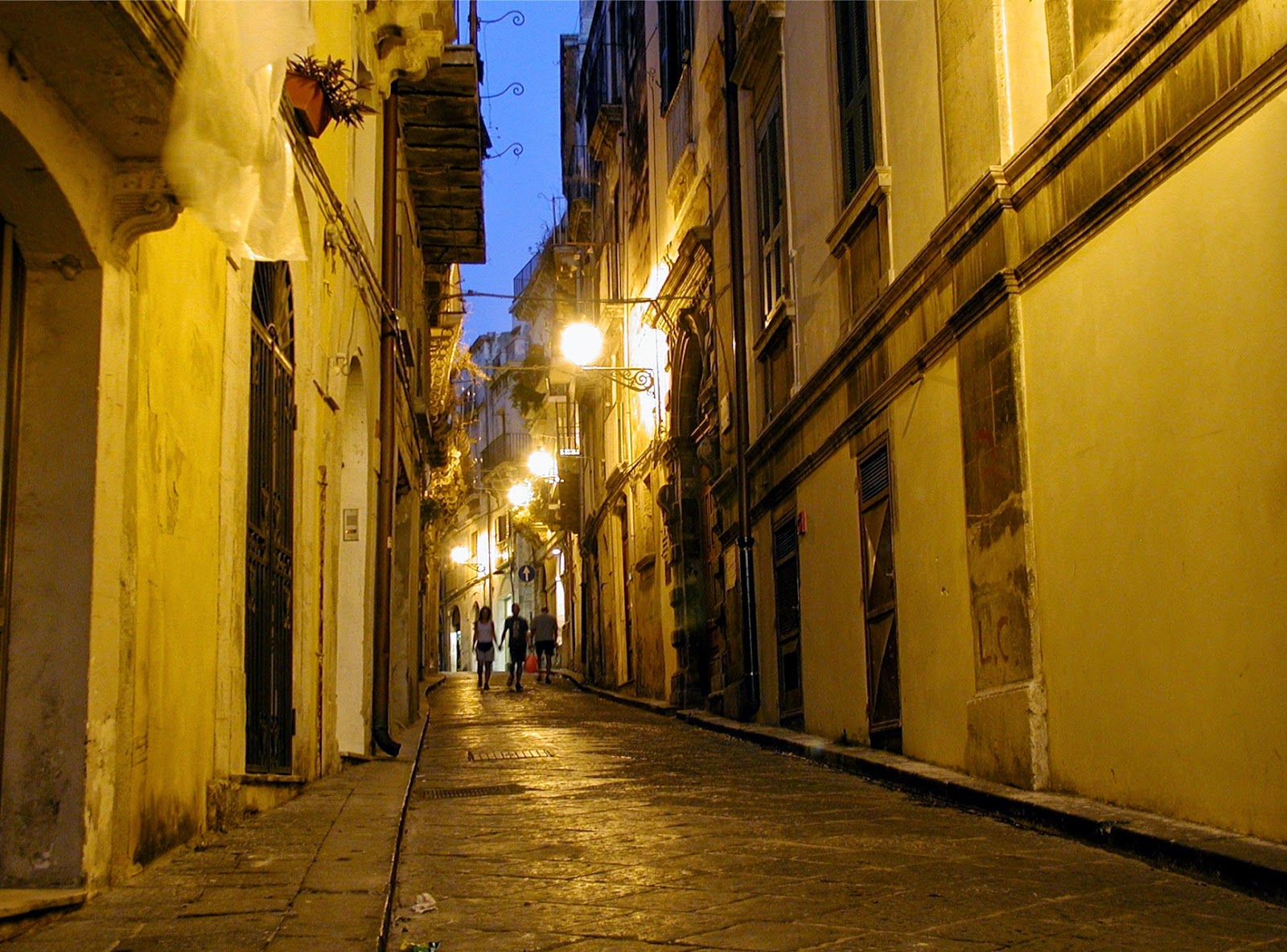
ITALIAN IDYLL

Italy is a unitary parliamentary republic in Europe, covering an area of 301,338 km2 and has a largely temperate climate. Due to its shape, it is often referred to in Italy as lo Stivale (the Boot). With 61 million inhabitants, it is the 5th most populous country in Europe and a very highly developed country, having the third largest economy in the Eurozone and the eighth-largest in the world.

Since ancient times, Etruscan, Magna Graecia and other cultures have flourished in the territory of present-day Italy, being eventually absorbed by Rome, that has for centuries remained the leading political and religious centre of Western civilisation, capital of the Roman Empire and Christianity. During the Dark Ages, the Italian Peninsula faced calamitous invasions by barbarian tribes, but beginning around the 11th century, numerous Italian city-states rose to great prosperity through shipping, commerce and banking (indeed, modern capitalism has its roots in Medieval Italy).

Especially during The Renaissance, Italian culture thrived, producing scholars, artists, and polymaths such as Leonardo da Vinci, Galileo, Michelangelo and Machiavelli. Italian explorers such as Polo, Columbus, Vespucci, and Verrazzano discovered new routes to the Far East and the New World, helping to usher in the European Age of Discovery. Nevertheless, Italy would remain fragmented into many warring states for the rest of the Middle Ages, subsequently falling prey to larger European powers such as France, Spain, and later Austria.

Italy would thus enter a long period of decline that lasted until the mid 19th century. After various unsuccessful attempts, the second and the third wars of Italian Independence resulted in the unification of most of present-day Italy between 1859-66. From the late 19th century to the early 20th century, the new Kingdom of Italy rapidly industrialised and acquired a colonial empire becoming a Great Power. However, Southern and rural Italy remained largely excluded from industrialisation, fuelling a large and influential diaspora.

Despite victory in World War I, Italy entered a period of economic crisis and social turmoil, which favoured the establishment of a Fascist dictatorship in 1922. The subsequent participation in World War II at the side the Axis ended in military defeat, economic destruction and civil war. In the years that followed, Italy abolished the monarchy, reinstated democracy, and enjoyed a prolonged economic boom, thus becoming one of the most developed nations and the 5th largest economy in the world by 1990.

This post is part of the Waterworld Wednesday meme,

and also part of the Outdoor Wednesday meme,
and also part of the Wordless Wednesday meme,
and also part of the ABC Wednesday meme.


Monday, 9 March 2015

ON THE WALLS OF ATHENS

In 2007 we visited Greece and these photos are some of the graffiti and murals we saw on the walls of central Athens. Below the photos are captions that explain the main point that is being made.

This post is part of the Monday Murals meme.
The sign in the centre reads: "SANTA CLAUS, DON'T WEEP" 
On the far right, the writing reads: "WE ARE EVERYWHERE"
The label above reads: "YUSURUM = Flea Market"
The bust of Zeus, head honcho of the ancient Greek pantheon
Old public transport depot walls

Destroy cars, use public transport!
Famed traditional Greek shadow puppets
A mixture of political and sporting slogans, as well as shameless tagging vandalism