and also part of the Ruby Tuesday meme.
Tuesday, 10 December 2013
POPPY
This post is part of the Nature Footsteps Floral Macros meme,
and also part of the Ruby Tuesday meme.
Monday, 9 December 2013
NASTURTIUMS
Tropaeolum, commonly known as nasturtium (literally "nose-twister" or "nose-tweaker"), is a genus of roughly 80 species of annual and perennial herbaceous flowering plants. It was named by Carl Linnaeus and is the only genus in the family Tropaeolaceae. The nasturtiums received their common name because they produce an oil that is similar to that of watercress (Nasturtium officinale).
The genus Tropaeolum, native to South and Central America, includes several very popular garden plants, the most commonly grown being T. majus, T. peregrinum and T. speciosum. The hardiest species is T. polyphyllum from Chile, the perennial roots of which can survive underground when air temperatures drop as low as −15°C.Plants in this genus have showy, often intensely bright flowers, and rounded, peltate (shield-shaped) leaves with the petiole in the centre. The flowers have five petals (sometimes more), a three-carpelled ovary, and a funnel-shaped nectar tube at the back.
This post is part of the Mandarin Orange Monday meme,
and also part of the Nature Footsteps Inspiring Photography meme.
The genus Tropaeolum, native to South and Central America, includes several very popular garden plants, the most commonly grown being T. majus, T. peregrinum and T. speciosum. The hardiest species is T. polyphyllum from Chile, the perennial roots of which can survive underground when air temperatures drop as low as −15°C.Plants in this genus have showy, often intensely bright flowers, and rounded, peltate (shield-shaped) leaves with the petiole in the centre. The flowers have five petals (sometimes more), a three-carpelled ovary, and a funnel-shaped nectar tube at the back.
This post is part of the Mandarin Orange Monday meme,
and also part of the Nature Footsteps Inspiring Photography meme.
Sunday, 8 December 2013
PERTH BY NIGHT
Perth is the capital and largest city of the Australian state of Western Australia. It is the fourth most populous city in Australia, with an estimated population of 1.9 million living in Greater Perth. Part of the South West Land Division of Western Australia, the majority of the metropolitan area of Perth is located on the Swan Coastal Plain, a narrow strip between the Indian Ocean and the Darling Scarp, a low coastal escarpment.
The first areas settled were on the Swan River, with the city's central business district and port (Fremantle) both located on its shores. Perth is formally divided into a number of local government areas, which themselves consist of a large number of suburbs, extending from Two Rocks in the north to Rockingham in the south, and east inland to The Lakes.
This post is part of the Scenic Weekends meme.
The first areas settled were on the Swan River, with the city's central business district and port (Fremantle) both located on its shores. Perth is formally divided into a number of local government areas, which themselves consist of a large number of suburbs, extending from Two Rocks in the north to Rockingham in the south, and east inland to The Lakes.
This post is part of the Scenic Weekends meme.
Saturday, 7 December 2013
Friday, 6 December 2013
AIRPORT
Not very good weather for flying as a storm is approaching... Nevertheless, we made it safe and sound, if somewhat bumpy.
This post is part of the Skywatch Friday meme.
Thursday, 5 December 2013
TORCH PLANT
There are more than 325 species of aloes with about 60 different species known in cultivation in Australia. They vary in height from 60cm to 18m. Many aloes flower in winter, most will grow almost anywhere and all require very little maintenance. Despite these advantages aloes are rarely seen in modern Australian gardens.
Aloes grow naturally in arid and semi-arid areas, and are well-suited to dry climate gardens in Australia. They will tolerate low fertile soils and will survive infrequent watering, as well as salt air and extremely cold temperatures. Aloes will grow in semi-shaded areas, but prefer a position in full sun. Aloes are relatively tough plants requiring little maintenance. They can also be used to good effect in areas where nothing else will grow, such as an exposed dry hillside. Young plants need to be protected from severe frost.
Aloes will bloom every year and do not die back after flowering. One of the best known of the aloes is Aloe vera, which is used medicinally and cosmetically. The sap from this plant is useful for skin treatments, particularly for burns, and is available in many cosmetics, shampoos and ointments.
One of the most striking of the aloes is the winter-flowering Aloe arborescens: Known as the candelabra aloe or torch plant after its spikes of tubular scarlet flowers, Aloe arborescens is grown as a garden plant around the world. It is native to southern Africa, from the Cape to Zimbabwe and Malawi. The plant grows in large clumps, reaching up to 2m tall, with a spread of up to 3m. In south-eastern Australia it flowers from late June to late August or September. Its glorious red blooms stand out against a blue winter sky.
The plant in the background is Agave attenuata.
Aloes grow naturally in arid and semi-arid areas, and are well-suited to dry climate gardens in Australia. They will tolerate low fertile soils and will survive infrequent watering, as well as salt air and extremely cold temperatures. Aloes will grow in semi-shaded areas, but prefer a position in full sun. Aloes are relatively tough plants requiring little maintenance. They can also be used to good effect in areas where nothing else will grow, such as an exposed dry hillside. Young plants need to be protected from severe frost.
Aloes will bloom every year and do not die back after flowering. One of the best known of the aloes is Aloe vera, which is used medicinally and cosmetically. The sap from this plant is useful for skin treatments, particularly for burns, and is available in many cosmetics, shampoos and ointments.
One of the most striking of the aloes is the winter-flowering Aloe arborescens: Known as the candelabra aloe or torch plant after its spikes of tubular scarlet flowers, Aloe arborescens is grown as a garden plant around the world. It is native to southern Africa, from the Cape to Zimbabwe and Malawi. The plant grows in large clumps, reaching up to 2m tall, with a spread of up to 3m. In south-eastern Australia it flowers from late June to late August or September. Its glorious red blooms stand out against a blue winter sky.
The plant in the background is Agave attenuata.
This post is part of the Floral Friday Fotos meme.
Wednesday, 4 December 2013
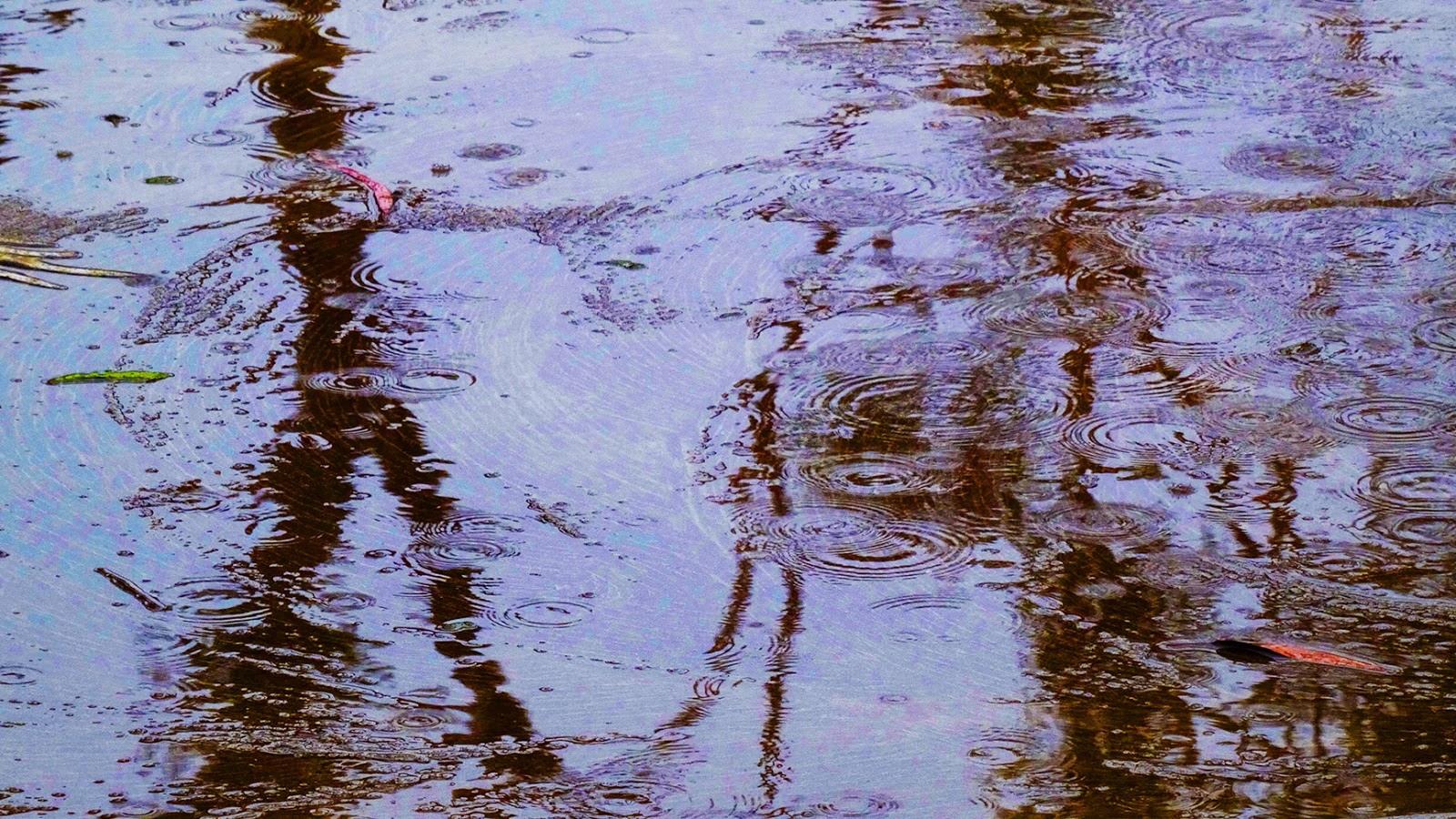
RAINY DAY
This post is part of the Waterworld Wednesday meme,
and also part of the Outdoor Wednesday meme,
and also part of the Wordless Wednesday meme.
and also part of the Outdoor Wednesday meme,
and also part of the Wordless Wednesday meme.
Tuesday, 3 December 2013
CACTUS FLOWERS
This post is part of the Nature Footsteps Floral Macros meme,
and also part of the Our World Tuesday meme,
and also part of the Ruby Tuesday meme.
and also part of the Our World Tuesday meme,
and also part of the Ruby Tuesday meme.
Monday, 2 December 2013
PINCUSHION PROTEAS
Leucospermum (Pincushion, Pincushion Protea) is a genus of about 50 species of flowering plants in the family Proteaceae, native to Zimbabwe and South Africa, where they occupy a variety of habitats, including scrub, forest, and mountain slopes.
They are evergreen shrubs (rarely small trees) growing to 0.5-5 m tall. The leaves are spirally arranged, tough and leathery, simple, linear to lanceolate, 2-12 cm long and 0.5-3 cm broad, with a serrated margin or serrated at the leaf apex only.
The flowers are produced in dense inflorescences, which have large numbers of prominent styles, which inspires the name. The genus is closely related in evolution and appearance to the Australian genus Banksia.
This post is part of the Monday Mellow Yellows meme,
and also part of the Mandarin Orange Monday meme.
They are evergreen shrubs (rarely small trees) growing to 0.5-5 m tall. The leaves are spirally arranged, tough and leathery, simple, linear to lanceolate, 2-12 cm long and 0.5-3 cm broad, with a serrated margin or serrated at the leaf apex only.
The flowers are produced in dense inflorescences, which have large numbers of prominent styles, which inspires the name. The genus is closely related in evolution and appearance to the Australian genus Banksia.
This post is part of the Monday Mellow Yellows meme,
and also part of the Mandarin Orange Monday meme.
Sunday, 1 December 2013
GOATSBEARD
Tragopogon porrifolius is a plant cultivated for its ornamental flower, edible root, and herbal properties. It also grows wild in many places and is one of the most widely known species of the salsify genus, Tragopogon. It is commonly known as purple or common salsify, oyster plant, vegetable oyster, Jerusalem star, goatsbeard or simply salsify (although these last two names are also applied to other species, as well). The seedhead shown here is also very beautiful.
This post is part of the I Heart Macros meme.
Subscribe to:
Posts (Atom)