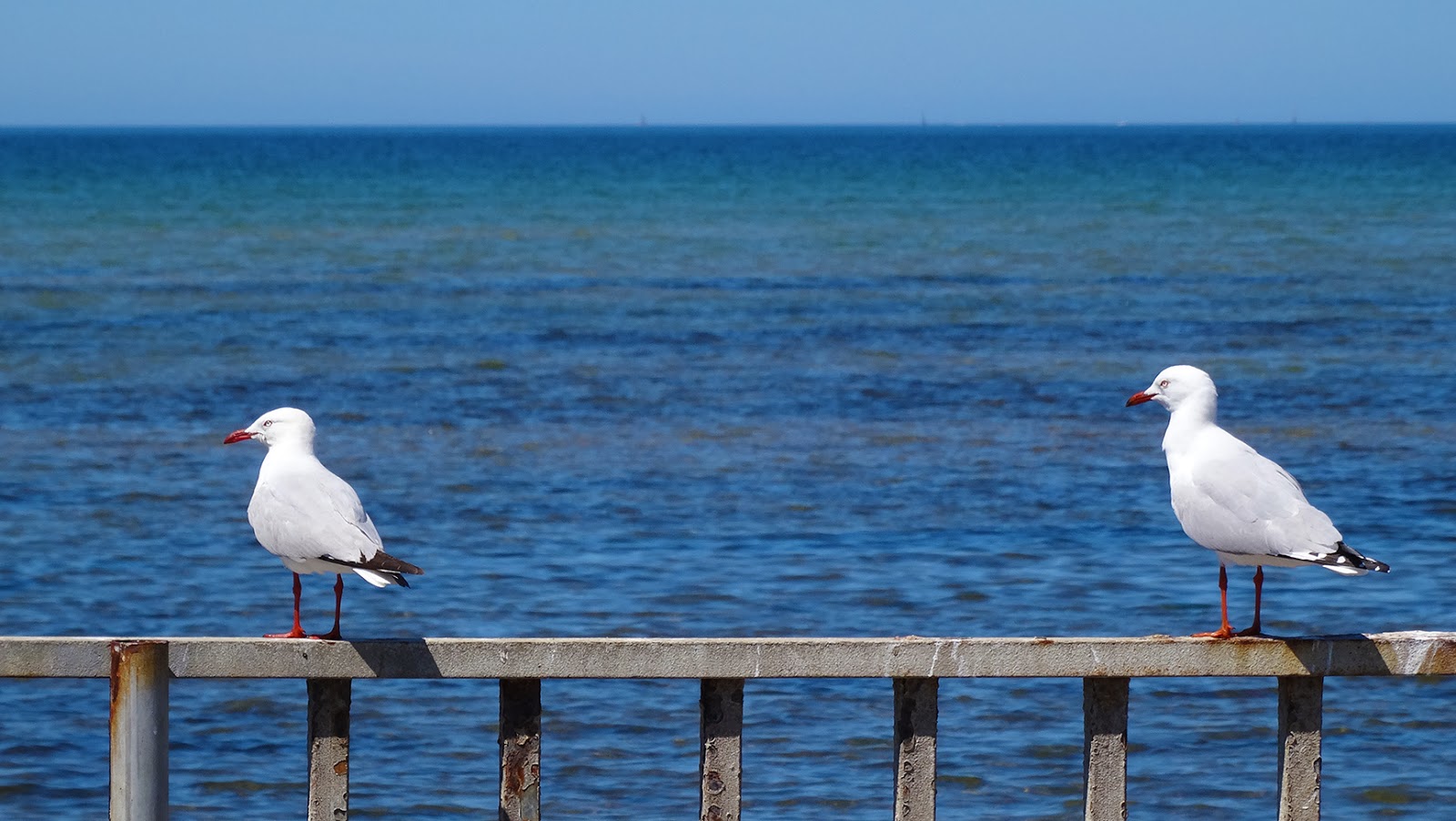
This post is part of the Wednesday Waters meme,
and also part of the Waterworld Wednesday meme,
and also part of the Outdoor Wednesday meme,
and also part of the Wordless Wednesday meme,
and also part of the Wild Bird Wednesday meme.
Showing posts with label wild_bird_Wednesday. Show all posts
Wednesday, 30 September 2015
Wednesday, 3 June 2015
FEEDING DUCKS
...and thieving gulls!
This post is part of the Wednesday Waters meme,
and also part of the Waterworld Wednesday meme,
and also part of the Outdoor Wednesday meme,
and also part of the Wild Bird Wednesday meme,
and also part of the Wordless Wednesday meme.
This post is part of the Wednesday Waters meme,
and also part of the Waterworld Wednesday meme,
and also part of the Outdoor Wednesday meme,
and also part of the Wild Bird Wednesday meme,
and also part of the Wordless Wednesday meme.
Wednesday, 6 August 2014
BIRD BATH
This post is part of the Waterworld Wednesday meme,
and also part of the Outdoor Wednesday meme,
and also part of the Wordless Wednesday meme,
and also part of the Wild Bird Wednesday meme,
and also part of the ABC Wednesday meme.
and also part of the Outdoor Wednesday meme,
and also part of the Wordless Wednesday meme,
and also part of the Wild Bird Wednesday meme,
and also part of the ABC Wednesday meme.
Wednesday, 9 April 2014
"M" IS FOR A MUSICAL MAGPIE
“Music produces a kind of pleasure which human nature cannot do without.” - Confucius
Here is a magpie. The Australian Magpie (Cracticus tibicen) is a medium-sized black and white passerine bird native to Australia and southern New Guinea. A member of the Cracticidae, it is closely related to the butcherbirds. Described as one of Australia's most accomplished songbirds, the Australian Magpie has an array of complex vocalisations.
I was listening to the radio today and they invited listeners to remember the first piece that “hooked” them on classics. Ever since I remember, music was part of our household. Whether the radio, stereo, TV or people actually singing live, music there was. When we moved to Australia, I remember having to live in a country town for a little while. This was quite a big change for us, because we had lived in big cities up until then.
One day, the school organised an outing to the Town Hall, where a full symphony orchestra in one of its country tours was giving a concert. They played several pieces, but the very first one was the one that impressed my young mind the most. It was Rossini at his most exuberant, an overture full of drama and a wonderful showcase of the orchestra’s colours. The piece was the overture to his opera “La Gazza Ladra” (The Thieving Magpie). This is an opera of servant girl accused of stealing her mistress’s jewels, whereas in fact a magpie has purloined them. Just as the poor girl is going to hang for her crime, the real “thief” is discovered and all ends well.
The orchestra begins with a drum roll and a march, which is quickly followed by a glorious Rossini melody that is so juicy and rich, that it is as if you are biting into a ripe plum. There are beautiful solos for woodwinds, Rossini crescendos, excitement and drama. What a marvellous introduction to the classics for an impressionable 10-year-old!
Here is the New Philharmonia Orchestra, with Rossini’s “Thieving Magpie” overture:
One day, the school organised an outing to the Town Hall, where a full symphony orchestra in one of its country tours was giving a concert. They played several pieces, but the very first one was the one that impressed my young mind the most. It was Rossini at his most exuberant, an overture full of drama and a wonderful showcase of the orchestra’s colours. The piece was the overture to his opera “La Gazza Ladra” (The Thieving Magpie). This is an opera of servant girl accused of stealing her mistress’s jewels, whereas in fact a magpie has purloined them. Just as the poor girl is going to hang for her crime, the real “thief” is discovered and all ends well.
The orchestra begins with a drum roll and a march, which is quickly followed by a glorious Rossini melody that is so juicy and rich, that it is as if you are biting into a ripe plum. There are beautiful solos for woodwinds, Rossini crescendos, excitement and drama. What a marvellous introduction to the classics for an impressionable 10-year-old!
Here is the New Philharmonia Orchestra, with Rossini’s “Thieving Magpie” overture:
This post is part of the Outdoor Wednesday meme,
and also part of the Wild Bird Wednesday meme,
and also part of the ABC Wednesday meme.
Wednesday, 20 November 2013
AUSTRALIAN MAGPIES
The Australian Magpie (Cracticus tibicen) is a medium-sized black and white passerine bird native to Australia and southern New Guinea. A member of the Cracticidae, it is closely related to the butcherbirds. At one stage, the Australian Magpie was considered to be three separate species, although zones of hybridisation between forms reinforced the idea of a single species with several subspecies, nine of which are now recognised. The adult Australian Magpie is a fairly robust bird ranging from 37 to 43 cm in length, with distinctive black and white plumage, gold brown eyes and a solid wedge-shaped bluish-white and black bill. The male and female are similar in appearance, and can be distinguished by differences in back markings. With its long legs, the Australian Magpie walks rather than waddles or hops and spends much time on the ground. This adaptation has led to many authorities maintaining it in its own genus Gymnorhina, however a genetic study published in 2013 has shown it to be most closely related to the Black Butcherbird (C. quoyi) rather than an early offshoot from the other butcherbirds.
Described as one of Australia's most accomplished songbirds, the Australian Magpie has an array of complex vocalisations. It is omnivorous, with the bulk of its varied diet made up of invertebrates. It is generally sedentary and territorial throughout its range. Common and widespread, it has adapted well to human habitation and is a familiar bird of parks, gardens and farmland in Australia and New Guinea. Magpies were introduced into New Zealand in the 1860s but have subsequently been accused of displacing native birds and are now treated as a pest species. Introductions also occurred in the Solomon Islands and Fiji, where the birds are not considered an invasive species. Spring in Australia is magpie season, when a small minority of breeding magpies (almost always males) around the country become aggressive and swoop and attack those who approach their nests, especially bike riders. This species is commonly fed by households around the country and is the mascot of several Australian sporting teams.
This post is part of the Outdoor Wednesday meme,
and also part of the Wild Bird Wednesday meme.
Described as one of Australia's most accomplished songbirds, the Australian Magpie has an array of complex vocalisations. It is omnivorous, with the bulk of its varied diet made up of invertebrates. It is generally sedentary and territorial throughout its range. Common and widespread, it has adapted well to human habitation and is a familiar bird of parks, gardens and farmland in Australia and New Guinea. Magpies were introduced into New Zealand in the 1860s but have subsequently been accused of displacing native birds and are now treated as a pest species. Introductions also occurred in the Solomon Islands and Fiji, where the birds are not considered an invasive species. Spring in Australia is magpie season, when a small minority of breeding magpies (almost always males) around the country become aggressive and swoop and attack those who approach their nests, especially bike riders. This species is commonly fed by households around the country and is the mascot of several Australian sporting teams.
This post is part of the Outdoor Wednesday meme,
and also part of the Wild Bird Wednesday meme.
Wednesday, 13 November 2013
WELCOME SWALLOWS
Australia’s most widespread swallow, the Welcome Swallow (Hirundo neoxena) can be seen fluttering, swooping and gliding in search of flying insects in almost any habitat, between city buildings, over farmland paddocks, in deserts, wetlands, forests and grasslands and every habitat in between.
Sometimes these birds even occur at sea — the name ‘Welcome’ swallow comes from sailors who knew that the sight of a swallow meant that land was not far away. Swallows build their mud nests in many different situations, though most noticeably beneath bridges and on the walls of buildings.
This post is part of the Outdoor Wednesday meme,
Sometimes these birds even occur at sea — the name ‘Welcome’ swallow comes from sailors who knew that the sight of a swallow meant that land was not far away. Swallows build their mud nests in many different situations, though most noticeably beneath bridges and on the walls of buildings.
This post is part of the Outdoor Wednesday meme,
and also part of the Wild Bird Wednesday meme.
Wednesday, 6 November 2013
SEAGULLS
Gulls or seagulls are seabirds of the family Laridae in the sub-order Lari. They are most closely related to the terns (family Sternidae) and only distantly related to auks, skimmers, and more distantly to the waders. Until the twenty-first century most gulls were placed in the genus Larus, but this arrangement is now known to be polyphyletic, leading to the resurrection of several genera..
An older name for gulls is mew, cognate with German "Möwe", Dutch "meeuw" and French "mouette"; this term can still be found in certain regional dialects. Gulls are typically medium to large birds, usually grey or white, often with black markings on the head or wings. They typically have harsh wailing or squawking calls, stout, longish bills, and webbed feet.
Most gulls, particularly Larus species, are ground-nesting carnivores, which will take live food or scavenge opportunistically. Live food often includes crabs and small fish. Gulls have unhinging jaws which allow them to consume large prey. Apart from the kittiwakes, gulls are typically coastal or inland species, rarely venturing far out to sea.
This post is part of the Waterworld Wednesday meme,
and also part of the Outdoor Wednesday meme,
and also part of the Wild Bird Wednesday meme.
An older name for gulls is mew, cognate with German "Möwe", Dutch "meeuw" and French "mouette"; this term can still be found in certain regional dialects. Gulls are typically medium to large birds, usually grey or white, often with black markings on the head or wings. They typically have harsh wailing or squawking calls, stout, longish bills, and webbed feet.
Most gulls, particularly Larus species, are ground-nesting carnivores, which will take live food or scavenge opportunistically. Live food often includes crabs and small fish. Gulls have unhinging jaws which allow them to consume large prey. Apart from the kittiwakes, gulls are typically coastal or inland species, rarely venturing far out to sea.
This post is part of the Waterworld Wednesday meme,
and also part of the Outdoor Wednesday meme,
and also part of the Wild Bird Wednesday meme.
Wednesday, 30 October 2013
MALLARD DUCKS
The Mallard or Wild Duck (Anas platyrhynchos) is a dabbling duck which breeds throughout the temperate and subtropical Americas, Europe, Asia, and North Africa, and has been introduced to New Zealand and Australia. This duck belongs to the subfamily Anatinae of the waterfowl family Anatidae.
The male birds (drakes) have a glossy green head and are grey on wings and belly, while the females have mainly brown-speckled plumage. Mallards live in wetlands, eat water plants and small animals, and are gregarious. This species is the ancestor of most breeds of domestic ducks.
This post is part of the Waterworld Wednesday meme,
and also part of the Outdoor Wednesday meme,
and also part of the Wild Bird Wednesday meme.
The male birds (drakes) have a glossy green head and are grey on wings and belly, while the females have mainly brown-speckled plumage. Mallards live in wetlands, eat water plants and small animals, and are gregarious. This species is the ancestor of most breeds of domestic ducks.
This post is part of the Waterworld Wednesday meme,
and also part of the Outdoor Wednesday meme,
and also part of the Wild Bird Wednesday meme.
Wednesday, 9 October 2013
DOCILE BABY BIRD
This post is part of the Outdoor Wednesday meme,
and also part of the Wordless Wednesday meme,
and also part of the Wild Bird Wednesday meme.
and also part of the Wordless Wednesday meme,
and also part of the Wild Bird Wednesday meme.
Wednesday, 25 September 2013
AROUND DARLING HARBOUR
Darling Harbour is
intended to be one of Sydney’s trendy places, although some visitors find it
lacking in character (and greenery). It used to be a former dockside area, but
now the small functional harbour of yore has been transformed into a major
tourist site and a leading convention and exhibition centre.
A monorail service used to run from the Central Business District to Darling Harbour and skirted the harbour, making stops at points around the harbour. However, this year the monorail is being dismantled and its skeletal remains are to be seen in various parts of the city. Until now, Darling Harbour has been a place that has appealed more to kids, due to the number of children’s attractions, but the advent of the Cockle Wharf restaurant and cafe complex has added a new dimension to Darling Harbour.
A number of water features characterise the environs, while a wonderful walled Chinese Garden is a must-see attraction. The birds shown here are the Australian White Ibis (Threskiornis moluccus), is a wading bird of the ibis family Threskiornithidae. It is widespread across much of Australia. It has a predominantly white plumage with a bare, black head, long downcurved bill and black legs.
This post is part of the Waterworld Wednesday meme,
and also part of the Outdoor Wednesday meme,
A monorail service used to run from the Central Business District to Darling Harbour and skirted the harbour, making stops at points around the harbour. However, this year the monorail is being dismantled and its skeletal remains are to be seen in various parts of the city. Until now, Darling Harbour has been a place that has appealed more to kids, due to the number of children’s attractions, but the advent of the Cockle Wharf restaurant and cafe complex has added a new dimension to Darling Harbour.
A number of water features characterise the environs, while a wonderful walled Chinese Garden is a must-see attraction. The birds shown here are the Australian White Ibis (Threskiornis moluccus), is a wading bird of the ibis family Threskiornithidae. It is widespread across much of Australia. It has a predominantly white plumage with a bare, black head, long downcurved bill and black legs.
This post is part of the Waterworld Wednesday meme,
and also part of the Outdoor Wednesday meme,
and also part of the Wild Bird Wednesday meme.
Wednesday, 18 September 2013
GALAHS
The Galah, Eolophus roseicapilla, also known as the Rose-breasted Cockatoo, Galah Cockatoo, Roseate Cockatoo or Pink and Grey, is one of the most common and widespread cockatoos, and it can be found in open country in almost all parts of mainland Australia.It is endemic on the mainland and was introduced to Tasmania, where its distinctive pink and grey plumage and its bold and loud behaviour make it a familiar sight in the bush and increasingly in urban areas. It appears to have benefited from the change in the landscape since European colonisation and may be replacing the Major Mitchell's Cockatoo in parts of its range.The term galah is derived from gilaa, a word found in Yuwaalaraay and neighbouring Aboriginal languages.
This post is part of the Wild Bird Wednesday meme,
and also part of the Outdoor Wednesday meme.
This post is part of the Wild Bird Wednesday meme,
and also part of the Outdoor Wednesday meme.
Subscribe to:
Posts (Atom)