Wednesday, 17 August 2016

FOLIES BERGÈRE, PARIS

The Folies Bergère is a cabaret music hall, located in Paris, France. Established in 1869, the house was at the height of its fame and popularity from the 1890s' Belle Époque through the 1920s' Années Folles. The institution is still in business, and is always a strong symbol of French and Parisian life.

Located at 32 rue Richer in the 9th Arrondissement, the Folies Bergère was built as an opera house by the architect Plumeret. The closest métro stations are Cadet and Grands Boulevards. It opened on 2 May 1869 as the Folies Trévise, with light entertainment including operettas, opéra comique (comic opera), popular songs, and gymnastics. It became the Folies Bergère on 13 September 1872, named after a nearby street, the rue Bergère ("bergère" means "shepherdess"). The American impresario Florenz Ziegfeld, Jr., named his light-hearted, extravagant Broadway revues the Ziegfeld Follies (1907-1931), after the Parisian venue.

In 1882, Édouard Manet painted his well-known painting "A Bar at the Folies-Bergère" which depicts a bar-girl, one of the demimondaines, standing before a mirror. In 1886, Édouard Marchand conceived a new genre of entertainment for the Folies Bergère: the music-hall revue. Women would be the heart of Marchand's concept for the Folies. In the early 1890s, the American dancer Loie Fuller starred at the Folies Bergère. In 1902, illness forced Marchand to leave after 16 years.

1918, Paul Derval (1880–1966) made his mark on the revue. His revues were to feature extravagant costumes, sets and effects, and his "small nude women". Derval's small nude women would become the hallmark of the Folies. During his 48 years at the Folies, he launched the careers of many French stars including Maurice Chevalier, Mistinguett, Josephine Baker, Fernandel and many others.

In 1926, Josephine Baker, an African-American expatriate singer, dancer, and entertainer, caused a sensation at the Folies Bergère in a new revue, La Folie du Jour, in which she danced a number Fatou wearing a costume consisting of a skirt made of a string of artificial bananas and little else. Her erotic dancing and near nude performances were renowned. The Folies Bergère catered to popular taste. Shows featured elaborate costumes; the women's were frequently revealing, practically leaving them naked, and shows often contained a good deal of nudity. Shows also played up the "exoticness" of persons and objects from other cultures, obliging the Parisian fascination with the négritude of the 1920s.

The funeral of Paul Derval was held on 20 May 1966. He was 86 and had reigned supreme over the most celebrated music hall in the world. His wife Antonia, supported by Michel Gyarmathy, succeeded him. In August 1974, Antonia Derval passed on the direction of the business to Hélène Martini, the empress of the night (25 years earlier she had been a showgirl in the revues). This new mistress of the house reverted to the original concept to maintain the continued existence of the last music hall which remained faithful to the tradition. Since 2006, the Folies Bergère has presented some musical productions with Stage Entertainment like Cabaret (2006–2008), Zorro the Musical (2009–2010) and Scheherazade (2011-2012).

This post is part of the Travel Tuesday meme,
and also part of the Wordless Wednesday meme,
and also part of the ABC Wednesday meme.


Tuesday, 16 August 2016

BUDAPEST, HUNGARY

Budapest is the capital and the largest city of Hungary, and one of the largest cities in the European Union. It is the country's principal political, cultural, commercial, industrial, and transportation centre, sometimes described as the primate city of Hungary. According to the census, in 2011 Budapest had 1.74 million inhabitants, down from its 1989 peak of 2.1 million due to suburbanisation. The Budapest Metropolitan Area is home to 3.3 million people. The city covers an area of 525 square kilometres.

Budapest became a single city occupying both banks of the river Danube with the unification of Buda and Óbuda on the west bank, with Pest on the east bank on 17 November 1873. The history of Budapest began with Aquincum, originally a Celtic settlement that became the Roman capital of Lower Pannonia.

Hungarians arrived in the territory in the 9th century. Their first settlement was pillaged by the Mongols in 1241–42. The re-established town became one of the centres of Renaissance humanist culture by the 15th century. Following the Battle of Mohács and nearly 150 years of Ottoman rule, the region entered a new age of prosperity in the 18th and 19th centuries, and Budapest became a global city after its unification in 1873. It also became the second capital of the Austro-Hungarian Empire, a great power that dissolved in 1918, following World War I.

Budapest was the focal point of the Hungarian Revolution of 1848, the Hungarian Republic of Councils in 1919, the Battle of Budapest in 1945, and the Revolution of 1956. Cited as one of the most beautiful cities in Europe, Budapest's extensive World Heritage Site includes the banks of the Danube, the Buda Castle Quarter, Andrássy Avenue, Heroes' Square and the Millennium Underground Railway, the second-oldest metro line in the world. It has around 80 geothermal springs, the world's largest thermal water cave system, second largest synagogue, and third largest Parliament building.

The city attracts about 4.4 million tourists a year, making it the 25th most popular city in the world, and the 6th in Europe, according to Euromonitor. Considered a financial hub in Central Europe, the city ranked third on Mastercard's Emerging Markets Index, and ranked as the most liveable Central or Eastern European city on EIU's quality of life index. It is also ranked as "the world's second best city" by Condé Nast Traveler, and "Europe's 7th most idyllic place to live" by Forbes.

Eighteen universities are situated in Budapest, including the Central European University, Eötvös Loránd University and the Budapest University of Technology and Economics.

This post is part of the Our World Tuesday meme,
and also part of the Ruby Tuesday meme,
and also part of the Trees & Bushes meme,
and also part of the Travel Tuesday meme,
and also part of the Wordless Wednesday meme.


Saturday, 13 August 2016

SATURDAY SILHOUETTES #60

Welcome to the Saturday Silhouettes meme! This is a weekly meme that looks at SILHOUETTES in photography.

SILHOUETTE |ˌsɪlʊˈɛt| noun: The dark shape and outline of someone or something visible in restricted light against a brighter background.
ORIGIN - late 18th century: Named (although the reason remains uncertain) after Étienne de Silhouette (1709–67), French author and politician.
This post is also part of the Skywatch Friday meme.

Please add your contribution below, using the Linky tool.
As this is a small but select meme, please visit other contributors and add a comment - they like comments about their work as much as you do!

UBIRR ROCK ART

Ubirr is within the East Alligator region of Kakadu National Park in the Northern Territory of Australia, and is known for its rock art. It consists of a group of rock outcrops on the edge of the Nadab floodplain where there are several natural shelters that have a collection of Aboriginal rock paintings, some of which are many thousands of years old.

The art depicts certain creation ancestors as well as animals from the area such as barramundi, catfish, mullet, goannas, long-necked turtles, pig-nosed turtles, rock ringtail possums, and wallabies. From the top of Ubirr rock there is a panoramic view of the floodplains and escarpments.

Ubirr is approximately 40 km from Jabiru along a sealed road. The road is low-lying, so access can be restricted during periods of heavy rain. A short walk from the car park takes visitors past the main art sites to the foot of Ubirr Rock. The rock faces at Ubirr have been continuously painted and repainted since 40,000 BCE. Most paintings there were created about 2000 years ago. Some have been repainted right up to modern times. There are three main galleries of art accessible to visitors. National Park rangers, many of them Indigenous, give talks at all of these sites.

This post is part of the Skywatch Friday meme,
and also part of the Saturday Silhouettes meme,
and also part of the Scenic Weekends meme.


Friday, 12 August 2016

OLIVINE

The mineral olivine is a magnesium iron silicate with the formula (Mg+2, Fe+2)2SiO4. Thus it is a type of nesosilicate or orthosilicate. It is a common mineral in the Earth's subsurface but weathers quickly on the surface.

Olivine incorporates only minor amounts of elements other than oxygen, silicon, magnesium and iron. Manganese and nickel commonly are the additional elements present in highest concentrations.

Olivine gives its name to the group of minerals with a related structure (the olivine group) which includes tephroite (Mn2SiO4), monticellite (CaMgSiO4) and kirschsteinite (CaFeSiO4). Olivine gemstones are called peridot and chrysolite.

This post is part of the Friday Greens meme.

Thursday, 11 August 2016

AUSTRALIAN FLAME PEA

Chorizema cordatum, known as the heart-leaf flame pea or Australian flame pea, is a flowering plant of the Fabaceae (pea family), endemic to gravelly or loamy soils in eucalyptus forests, in the moist south western parts of Western Australia. It is a bushy, evergreen shrub.

The attractive and noticeable flowers appear in late winter or spring in long racemes. Either starting at the end of stems or from the leaf axils. Flowers are orange and red, 10 to 12 mm in diameter. The heart shaped (or narrower) leaves are 3 to 5 cm long with somewhat wavy edges.

It can be grown as a garden plant, and does well in other parts of the country, (such as Sydney on the other side of the Australian continent). However, a summer with lower humidity is better suited for this plant. Propagation from seed is easily achieved, and cuttings strike well. This plant has gained the Royal Horticultural Society's Award of Garden Merit.

This post is part of the Floral Friday Fotos meme,
and also part of the Orange you Glad It's Friday meme.


Wednesday, 10 August 2016

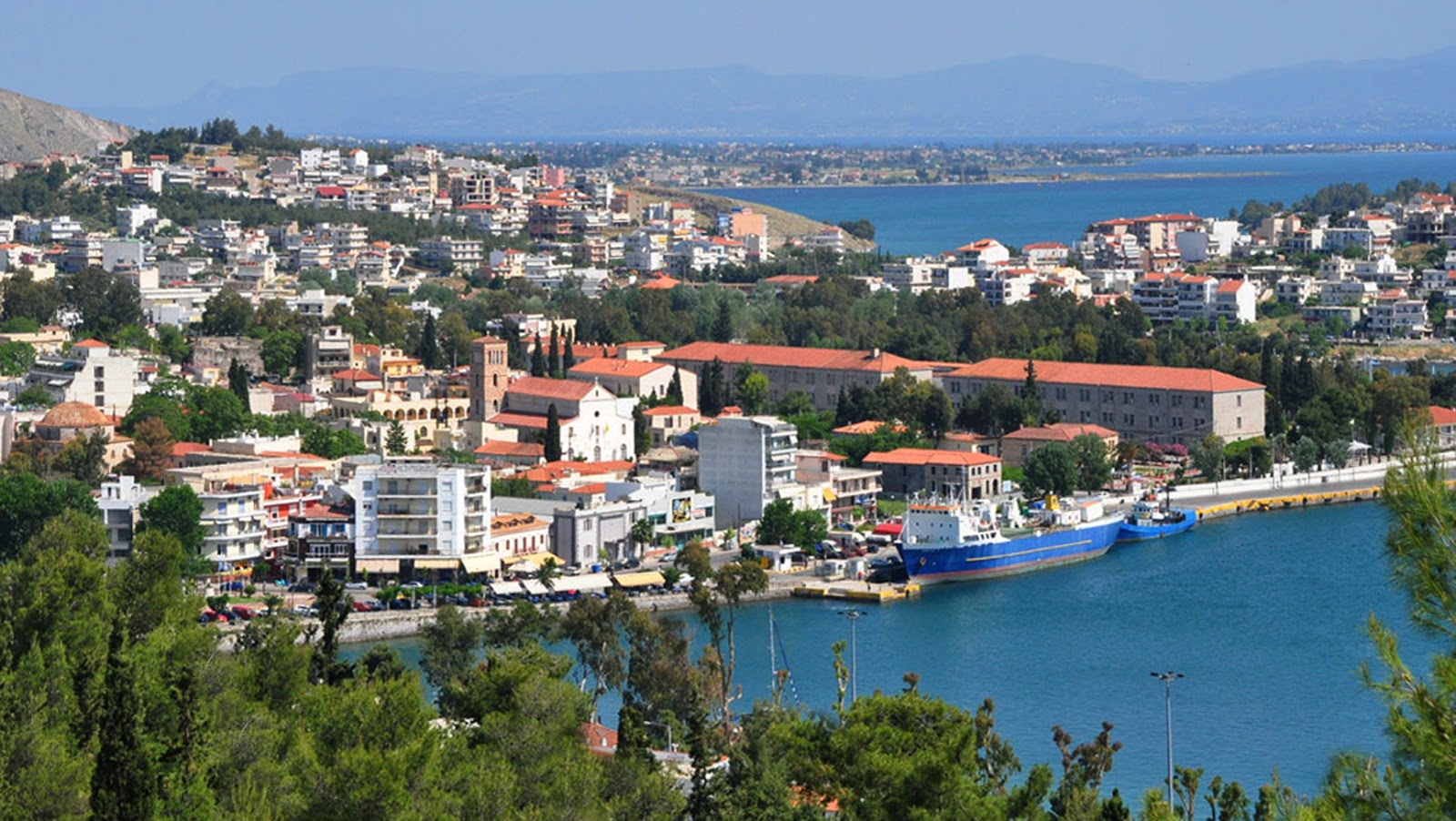
EUBOEA, GREECE

Euboea or Evia (Modern Greek: Εύβοια) is the second-largest Greek island in area and population, after Crete. The narrow Euripus Strait separates it from Boeotia in mainland Greece. In general outline it is a long and narrow, seahorse-shaped island; it is about 180 kilometres long, and varies in breadth from 50 kilometres to 6 kilometres. Its general direction is from northwest to southeast, and it is traversed throughout its length by a mountain range, which forms part of the chain that bounds Thessaly on the east, and is continued south of Euboea in the lofty islands of Andros, Tinos and Mykonos. It forms most of the regional unit of Euboea, which also includes Skyros and a small area of the Greek mainland.

Euboea has wonderful beaches, a pleasant climate, renowned monuments, many thermal springs and tasty food, and is thus a popular and easily accessible destination for the inhabitants of Athens who often holiday here. The cosmopolitan capital city of Chalkis is situated on the Euripus Strait at its narrowest point. The name is preserved from antiquity and is derived from the Greek χαλκός (chalkos - copper, bronze), though there is no trace of any mines in the area. In the late Middle Ages, it was known as Negropont, a name that was applied to the entire island of Euboea as well. Its people are known in English as Chalcidians. Chalkis has a population of about 105,000 people.

This post is part of the Travel Tuesday meme,
and also part of the  Wednesday Waters meme,
and also part of the Waterworld Wednesday meme,
and also part of the Outdoor Wednesday meme,
and also part of the Wordless Wednesday meme,
and also part of the ABC Wednesday meme.


Tuesday, 9 August 2016

LISBON, PORTUGAL

Lisbon (Portuguese: Lisboa) is the capital and the largest city of Portugal, with a population of 552,700 within its administrative limits in an area of 100.05 km². Its urban area extends beyond the city's administrative limits with a population of around 2.7 million people, being the 11th-most populous urban area in the European Union. About 2.8 million people live in the Lisbon Metropolitan Area (which represents approximately 27% of the country's population).

It is continental Europe's westernmost capital city and the only one along the Atlantic coast. Lisbon lies in the western Iberian Peninsula on the Atlantic Ocean and the River Tagus. The westernmost areas of its metro area is the westernmost point of Continental Europe. Lisbon is recognised as a global city because of its importance in finance, commerce, media, entertainment, arts, international trade, education and tourism. It is one of the major economic centres on the continent, with a growing financial sector and one of the largest container ports on Europe's Atlantic coast.

Lisbon is one of the oldest cities in the world, and the oldest in Western Europe, predating other modern European capitals such as London, Paris and Rome by centuries. Julius Caesar made it a municipium called Felicitas Julia, adding to the name Olissipo. Ruled by a series of Germanic tribes from the 5th century, it was captured by the Moors in the 8th century. In 1147, the Crusaders under Afonso Henriques reconquered the city and since then it has been a major political, economic and cultural centre of Portugal.

Unlike most capital cities, Lisbon's status as the capital of Portugal has never been granted or confirmed officially – by statute or in written form. Its position as the capital has formed through constitutional convention, making its position as de facto capital a part of the Constitution of Portugal.

This post is part of the Our World Tuesday meme,
and also part of the Ruby Tuesday meme,
and also part of the Travel Tuesday meme,
and also part of the Wordless Wednesday meme.