Showing posts with label Indonesia. Show all posts

Tuesday, 1 May 2018

JAVA, INDONESIA

Java is an island of Indonesia. At about 139,000 square kilometres, the island is comparable in size to England, the U.S. State of North Carolina, or Omsk Oblast. With a population of over 141 million (the island itself) or 145 million (the administrative region), Java is home to 56.7% of the Indonesian population and is the world's most populous island.

The Indonesian capital city, Jakarta, is located on western Java. Much of Indonesian history took place on Java. It was the centre of powerful Hindu-Buddhist empires, the Islamic sultanates, and the core of the colonial Dutch East Indies. Java was also the centre of the Indonesian struggle for independence during the 1930s and 1940s. Java dominates Indonesia politically, economically and culturally. Four of Indonesia's eight UNESCO world heritage sites are located in Java: 1) Ujung Kulon National Park, 2) Borobudur Temple, 3) Prambanan Temple, and 4) Sangiran Early Man Site.

Formed mostly as the result of volcanic eruptions, Java is the 13th largest island in the world and the fifth largest in Indonesia by landmass. A chain of volcanic mountains forms an east–west spine along the island. Three main languages are spoken on the island: Javanese, Sundanese, and Madurese. Of these, Javanese is the dominant; it is the native language of about 60 million people in Indonesia, most of whom live on Java. Furthermore, most residents are bilingual, speaking Indonesian (the official language of Indonesia) as their first or second language.

While the majority of the people of Java are Muslim, Java's population is a diverse mixture of religious beliefs, ethnicities, and cultures. Java is divided into four administrative provinces, West Java, Central Java, East Java, and Banten, and two special regions, Jakarta and Yogyakarta.

This post is part of the Our World Tuesday meme,
and also part of the Ruby Tuesday meme,
and also part of the Travel Tuesday meme,
and also part of the Wordless Wednesday meme.
Jakarta - the Capital City

Volcanic Landscape with imposing Mt Bromo

Tea Cultivation in the Highlands

The Awe-Inspiring Borobodur Temple

Wayang Golek - Javanese Marionettes

Magnificent Prambanan Temple

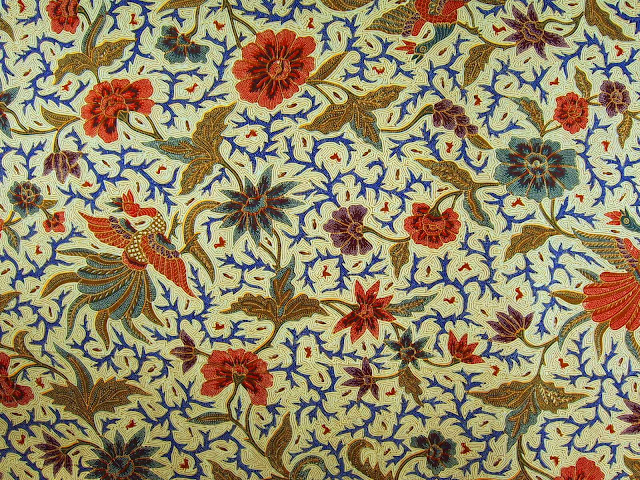
Traditional Batik Fabric

Renowned Java Coffee

Tasty Indonesian Cuisine

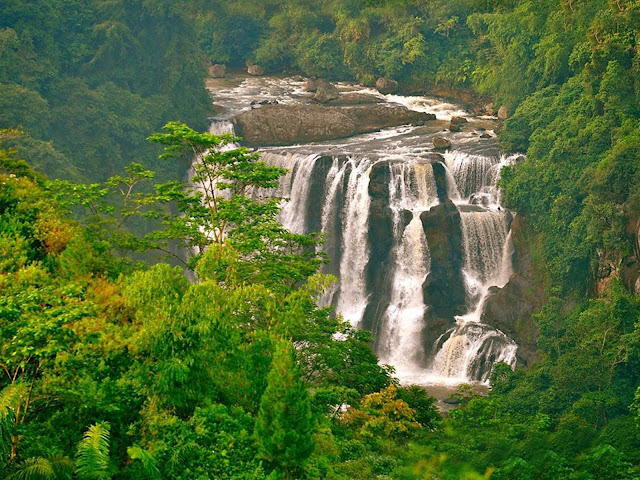
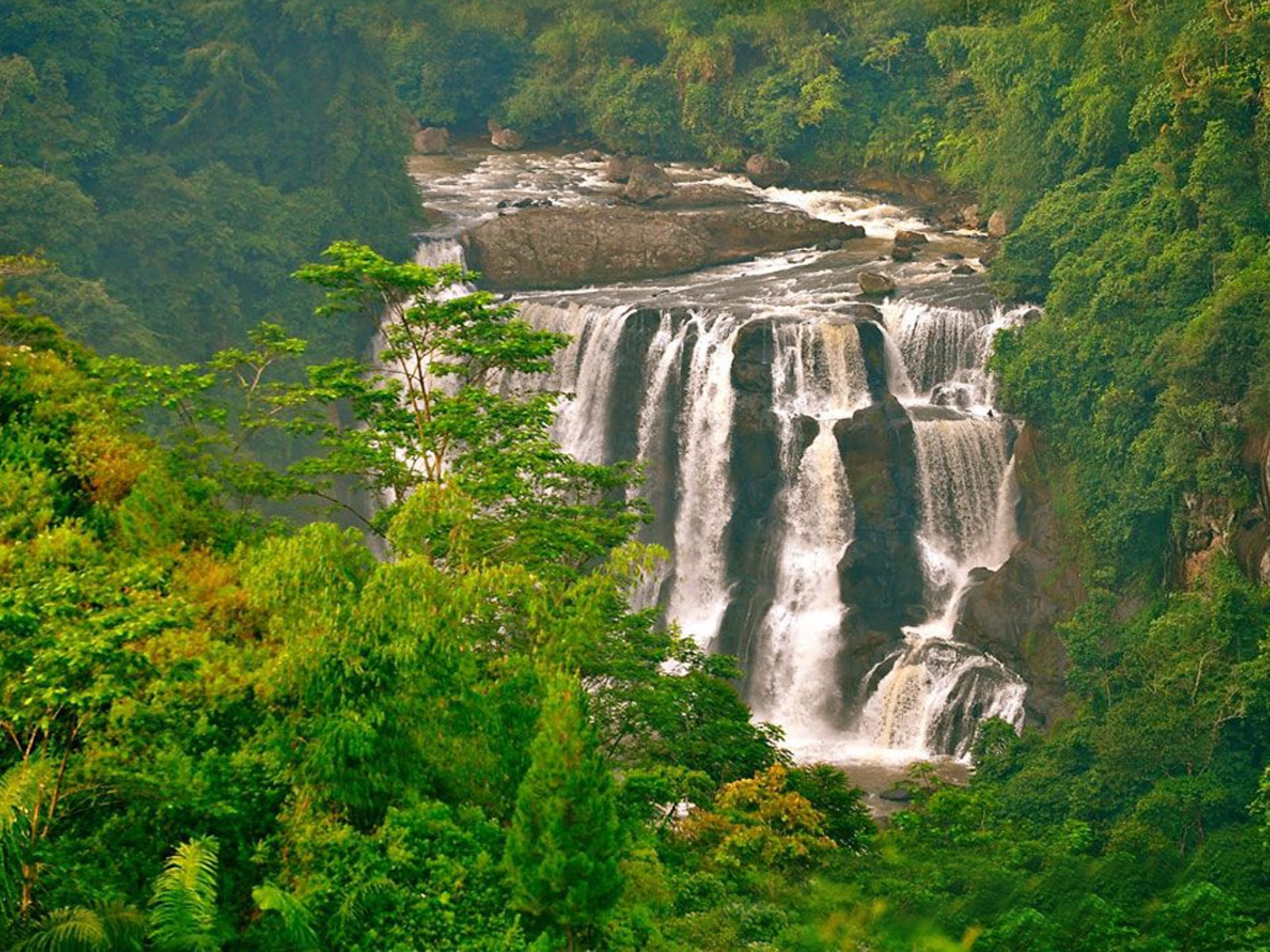
Malela Waterfall

Thursday, 28 December 2017

RAFFLESIA

Rafflesia arnoldii is a species of flowering plant in the parasitic genus Rafflesia. It is noted for producing the largest individual flower on earth. It has a very strong and horrible odour of decaying flesh, earning it the nickname "carrion flower". It is endemic to the rainforests of Sumatra and possibly Borneo.

Although there are some plants with larger flowering organs like the titan arum (Amorphophallus titanum) and talipot palm (Corypha umbraculifera), those are technically clusters of many flowers. Rafflesia arnoldii (Indonesian: Padma raksasa), also called Kerubut (Devil's Betelnut Box) is one of the three national flowers in Indonesia, the other two being the white jasmine and moon orchid. It was officially recognised as a national "rare flower" (Indonesian: Puspa langka) in Presidential Decree No. 4 in 1993.

The flower of Rafflesia arnoldii grows to a diameter of around one meter and weighs up to 11 kilograms. These flowers emerge from very large, cabbage-like, maroon or magenta buds typically about 30 cm wide, but the largest (and the largest flower bud ever recorded) found at Mount Sago, Sumatra in May 1956 was 43 cm.  It lives as a parasite on several vines of the genus Tetrastigma, which grow only in primary (undisturbed) rainforests.

Rafflesia lacks any observable leaves, stems or even roots, yet is still considered a vascular plant. Similar to fungi, individuals grow as thread-like strands of tissue completely embedded within and in intimate contact with surrounding host cells from which nutrients and water are obtained. This plant produces no leaves, stems or roots and does not have chlorophyll. It can only be seen outside the host plant when it is ready to reproduce. Perhaps the only part of Rafflesia that is identifiable as distinctly plant-like are the flowers, though even these are unusual since they attain massive proportions, have a reddish-brown coloration, and stink of rotting flesh. This scent attracts insects such as flies which then pollinate the rare plant.

This post is part of the Floral Friday Fotos meme.